Art Deco Interior Design 2026: The Rise
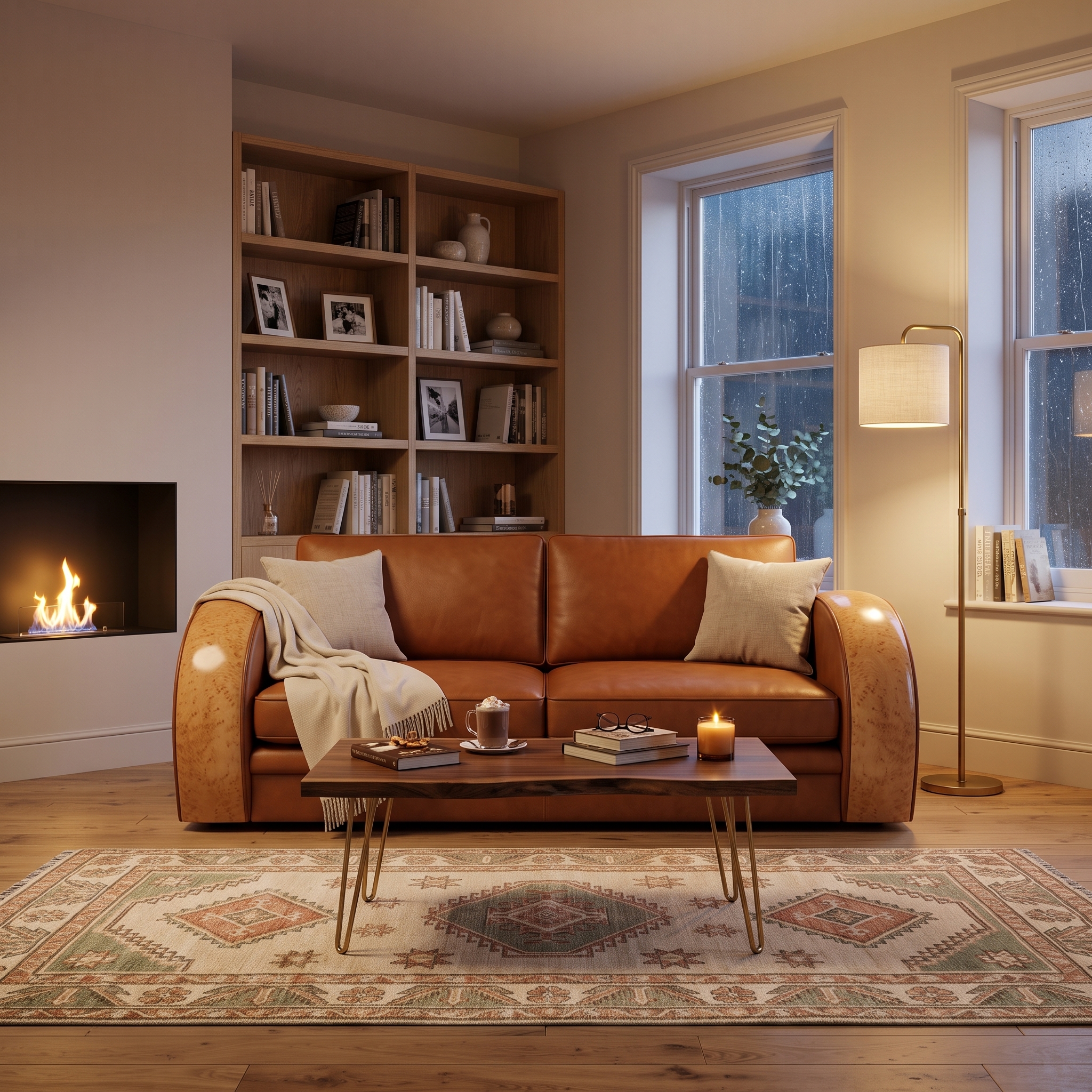
Art Deco interior design is experiencing one of the most significant style revivals in modern British interiors. Design publications from Vogue to Livingetc have identified what they call Neo Deco, a contemporary reinterpretation of the geometric luxury that defined the 1920s, as a leading trend for 2026. The appeal is understandable: Art Deco interiors combine bold geometry with rich materials in a way that feels both celebratory and deeply rooted in design history. For UK homeowners looking to introduce this aesthetic, the sofa is often the starting point, and British furniture makers have responded with designs that honour the original movement while meeting the demands of contemporary living.
This guide covers what Art Deco interior design means in 2026, how to identify an authentic Art Deco sofa, and why British-made designs from registered collections offer a level of craftsmanship and exclusivity that mass-produced alternatives cannot replicate.
What Is Art Deco Interior Design in 2026?
Art Deco originated in the 1920s as a design movement characterised by geometric forms, rich materials and a sense of restrained glamour. It developed partly in contrast to the organic curves of Art Nouveau, favouring symmetry, strong silhouettes and decorative detailing that drew on influences from Cubism, Egyptian antiquity and the machine age. The result was a style that felt simultaneously modern and luxurious, qualities that explain why it has never truly disappeared from interior design.
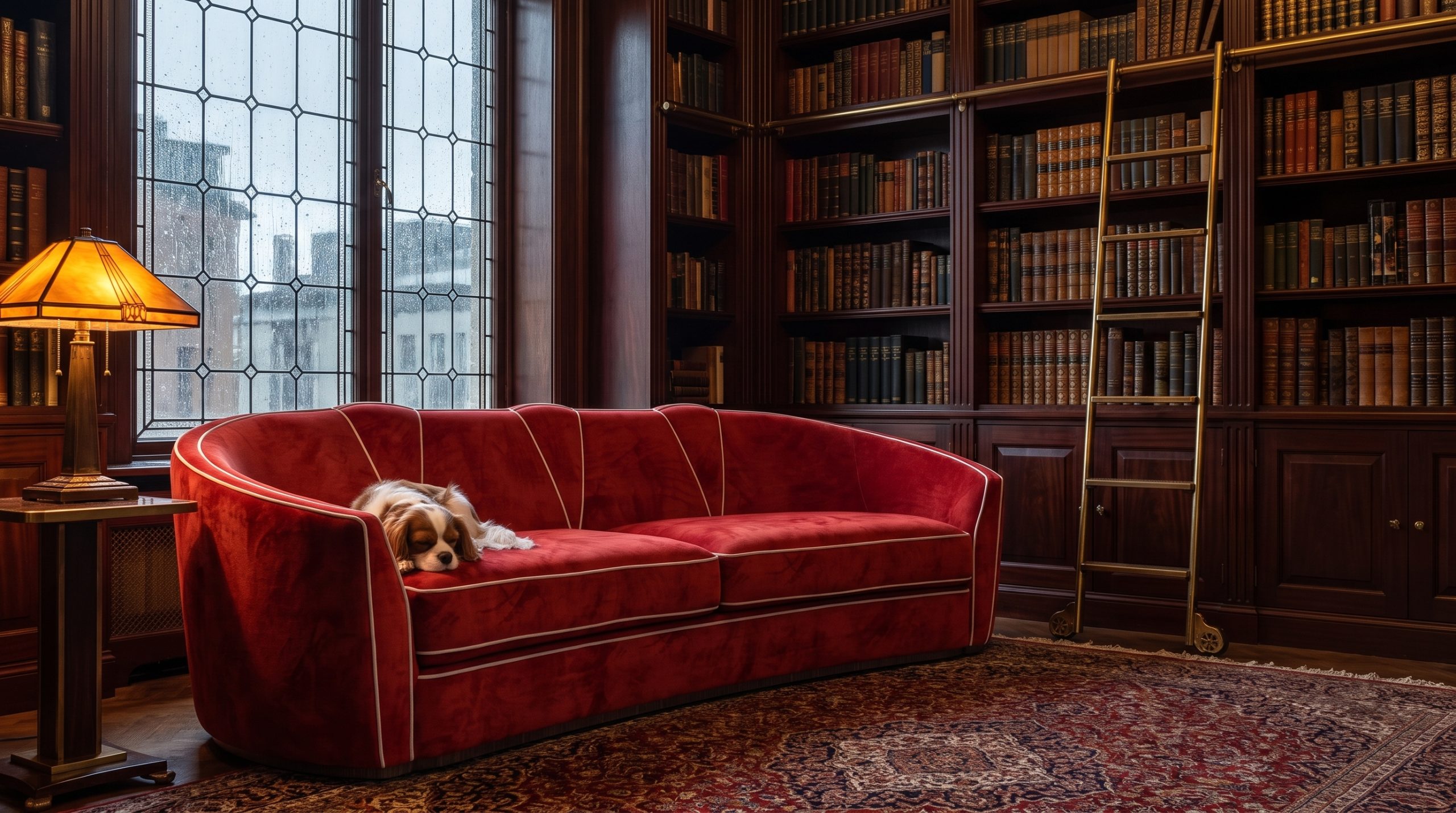
In 2026, the Neo Deco interpretation retains these core principles but adapts them for how people actually live today. The geometric lines remain, but they appear in lower-profile, more comfortable forms. The rich material palette still includes velvet, polished wood and leather, but it is now balanced with practical considerations such as durability, family-friendly fabrics and modular flexibility. Interior designers are pairing Art Deco statement pieces with neutral walls and contemporary flooring, allowing the furniture itself to provide the character rather than overwhelming the room with period-themed decoration.
The 2026 trend reports consistently highlight several Art Deco interior design elements: curved furniture forms, lacquered and show-wood finishes, geometric patterned rugs, mirrored or glass accessories, and layered lighting. What distinguishes the current revival from earlier ones is the emphasis on livability. The goal is no longer to recreate a 1920s film set but to borrow the confidence and elegance of Art Deco and make it work in a twenty-first-century British home.
What Makes a Sofa Art Deco?
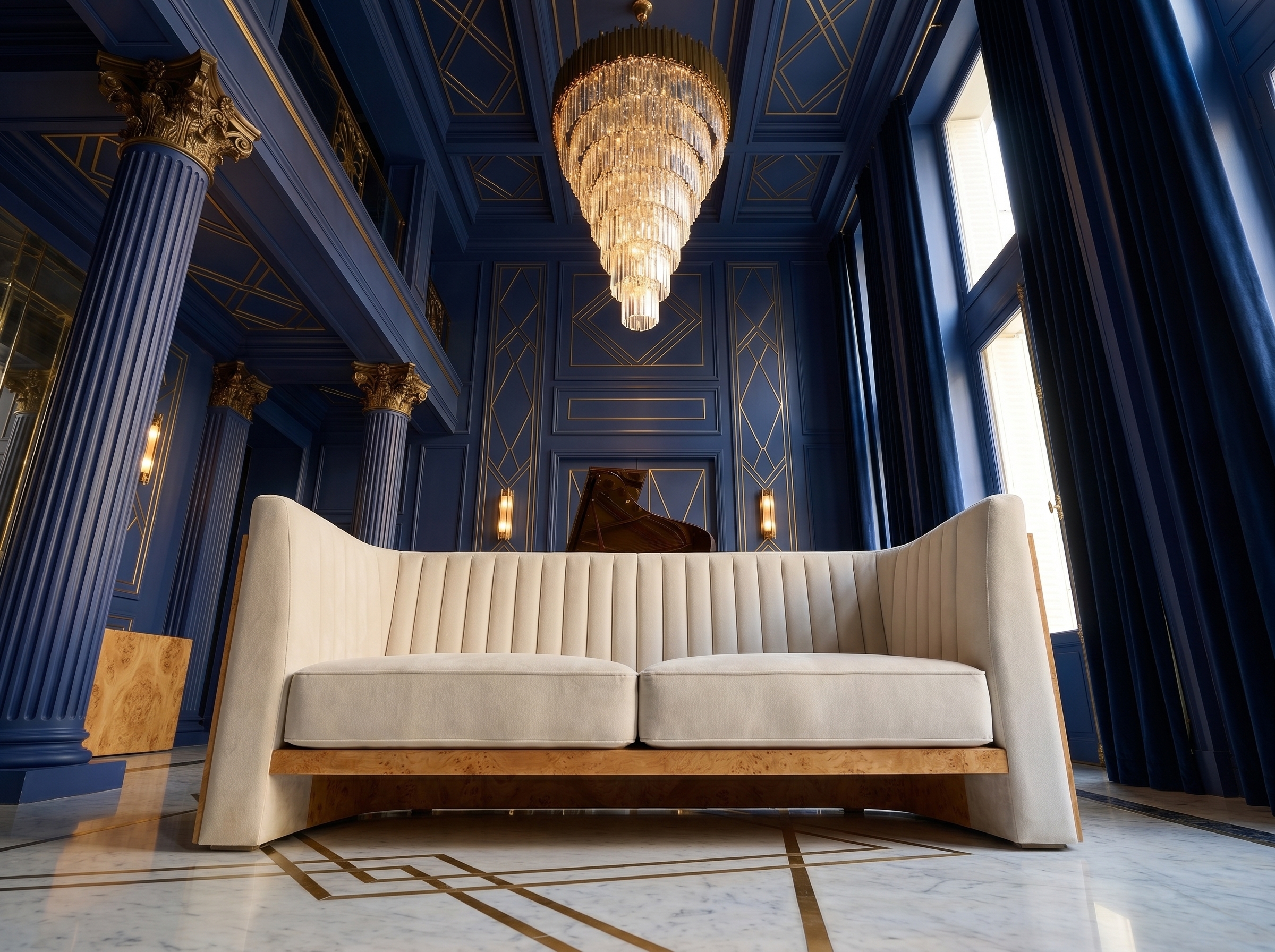
Not every sofa with rounded lines qualifies as Art Deco, and understanding the distinguishing characteristics helps when evaluating options and comparing designs. The core elements that define an Art Deco sofa include geometric proportions and symmetry, where the overall form follows clean, architectural lines rather than organic or casual shapes. Rich upholstery materials such as velvet, premium leather and textured fabrics are central to the aesthetic, reflecting the original movement’s emphasis on tactile luxury. Strong, confident silhouettes, often with defined arms and a structured profile, create a sense of presence in the room. Decorative details including show-wood veneers, pleating and carefully considered piping can enhance the Art Deco character, though they are not prerequisites.
Newman & Bright’s Art Deco Sofa Collection
Newman & Bright has developed a distinctive range of Art Deco-inspired sofas, several of which are registered designs with the UK Intellectual Property Office. This registration protects the original designs and ensures they cannot be legally replicated by competitors. The registered Art Deco models include the Gatsby Show-Wood, Garbo, Montrose, Hatfield, Opera, Cloud, Carnegie, Charleston, Harrington, The Step, The Tulip, Orleans and Cocoa. Each design interprets the Art Deco aesthetic in a different way, giving the collection considerable breadth.
The Gatsby is one of Newman & Bright’s most popular Art Deco models and is instantly recognisable as a classic example of the style. It is available in chair, two-seater, two-and-a-half-seater, three-seater and four-seater configurations, with prices ranging from approximately £1,595 to £2,760 depending on size and material. Most suites are available in both leather and fabric, and the design can be modified if the standard dimensions are not quite suitable for a particular space. A particularly appealing feature is the option for contrasting piping, which can be specified at a small additional charge, allowing buyers to personalise
the sofa to their interior scheme.
For those who want a more pronounced show-wood element, the separate Gatsby Show-Wood variant incorporates finely finished veneers into the design. This is a registered design in its own right and showcases the specialist craftsmanship involved in Newman & Bright’s show-wood production, where veneers including Birdseye Maple, Burr Walnut, Ebony, Elm Burr, Mahogany and Walnut are worked by experienced cabinetmakers.
The Garbo is a more recent addition to the Art Deco collection, described as a retro luxe model that combines elegance, retro charm and luxurious comfort. Its distinguishing feature is a sleek, low-profile design with gently curved sides, upholstered in a rich velvet fabric available in a range of sophisticated colours. The Garbo is also a registered design, offered in chair, two-seater, three-seater and four-seater sizes, with prices from approximately £2,995 to £4,780. Like the Gatsby, it is available in both leather and fabric, with veneer options for those who want to incorporate show-wood elements.
The Garbo works particularly well in pairs, placed opposite each other in a larger sitting room or positioned either side of a fireplace. Its low profile makes it a practical choice for rooms with lower ceilings or where a more understated Art Deco presence is desired.
The Montrose is a quintessential example of the Art Deco style, with its distinctive lines and motifs. Its most recognisable feature is the use of triangular sections, with three triangular divisions visible on the larger model and two on the smaller sizes. This geometric detailing gives the Montrose a strong visual identity that references the angular precision of original 1920s Art Deco furniture. Available in chair, two-seater, three-seater and four-seater configurations, with prices from approximately £2,995 to £4,745, the Montrose can be ordered in leather or fabric with the same extensive material choices available across the collection.
The Hatfield occupies a slightly different position within the collection. It is described as a classic pre-modern piece with hints of the Art Deco style, inspired by the work of the celebrated French designer Emile-Jacques Ruhlmann. What distinguishes the Hatfield is its polished show-wood finish and the elegant side and back pleating that adds texture without overwhelming the clean lines of the design. Available in chair, two-seater, three-seater and four-seater sizes, with prices from approximately £3,210 to £4,515, the Hatfield appeals to buyers who want a more understated Art Deco influence alongside traditional craftsmanship values.
The Step draws on a different strand of Art Deco history. It is an American Modern Art
Deco bench sofa, heavily based on designs by the German-born designer Karl Emanuel Martin Weber, who was a key figure in the American Modern Art Deco movement of the 1930s and is best remembered for his Streamline Moderne creations. The Step is available in chair, two-seater and three-seater sizes, with prices from approximately £2,100 to £3,950, and can be ordered in leather or fabric. Its bench-style form makes it a versatile choice for hallways, open-plan living areas and studies as well as traditional sitting rooms.
| Model | Key Feature | Price Range | Available In |
| Gatsby | Classic Art Deco design, contrasting piping, size modification | £1,595 – £2,760 | Leather & fabric |
| Gatsby Show-Wood | Registered design with finished veneers | £1,595 – £2,760 | Leather & fabric + veneers |
| Garbo | Low profile, gently curved sides, velvet option | £2,995 – £4,780 | Leather & fabric |
| Montrose | Triangular section detailing, angular Art Deco form | £2,995 – £4,745 | Leather & fabric |
| Hatfield | Ruhlmann-inspired, polished show-wood, pleated detail | £3,210 – £4,515 | Leather & fabric |
| The Step | American Streamline Moderne, bench sofa form | £2,100 – £3,950 | Leather & fabric |
Art Deco Interior Design Materials: Leather
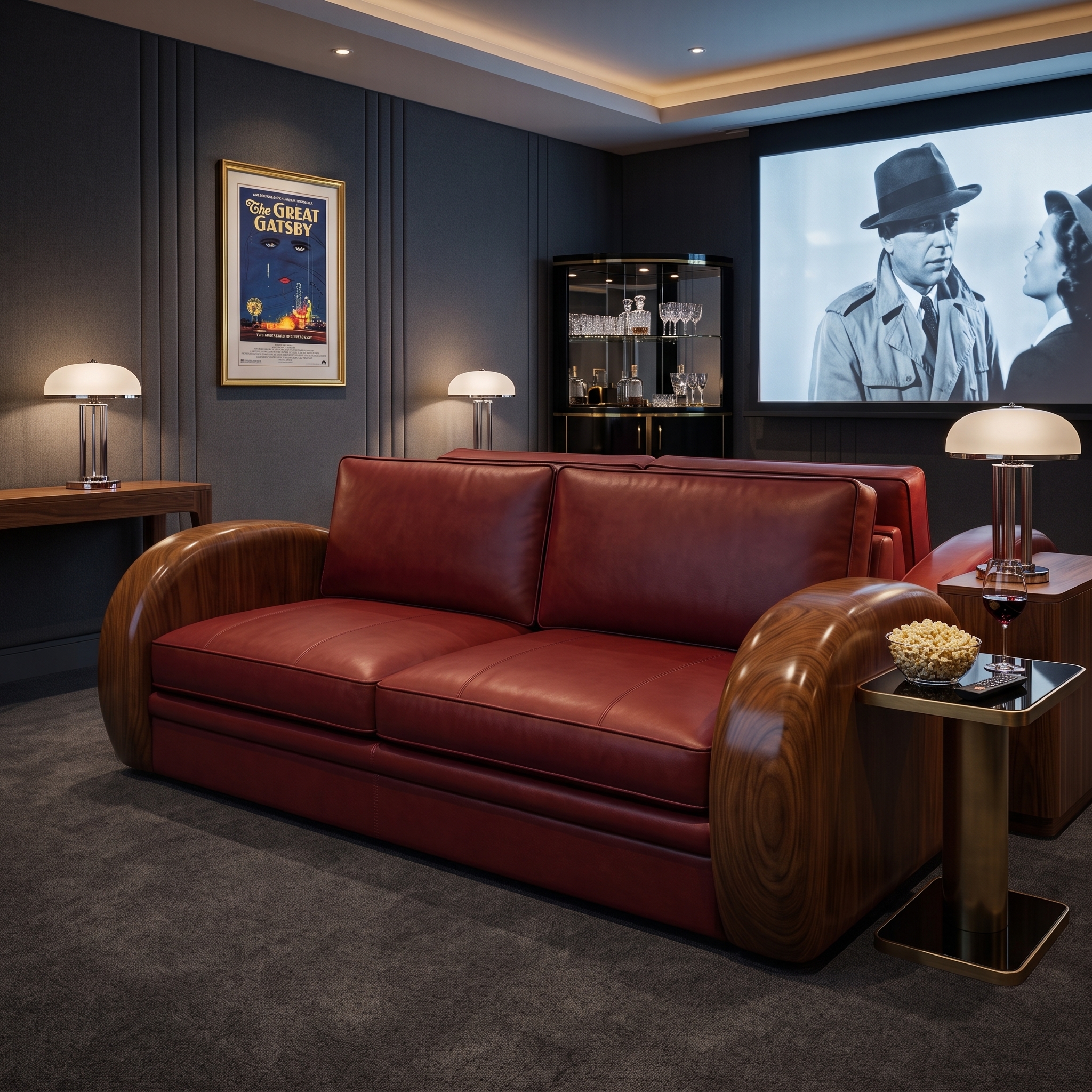
Leather has been central to Art Deco furniture since the original movement, and it remains one of the most popular material choices for Art Deco sofas today. Newman & Bright offers a considered range of leather types, each suited to different needs and aesthetics. Rather than offering a single leather grade, the company provides different leathers for different uses, which is a more honest and useful approach than pretending one type suits every situation.
The family business has been importing and working with leathers since the 1940s, sourcing from European and South American tanneries. The current range includes seven distinct leather types. Contempo is a corrected-grain leather made on Brazilian hides, offering durability, a soft feel and good stain resistance, making it a practical choice for households
with children or pets. Shelly is produced from high-quality European hides with a pigmented topcoat and embossed grain print, providing outstanding durability for heavy-duty use. Rub Off is a European semi-aniline leather with a distinctive two-tone finish where a darker topcoat can be rubbed back to reveal a lighter underlayer, creating an antique character.
For buyers who prefer a more natural appearance, Selvaggio is a lightly buffed natural leather treated with special oils and waxes for a soft, buttery feel. Vele is a contemporary semi-aniline developed with design experts to reflect current colour trends, offering excellent durability and light fastness. Old English is an aniline-finished pull-up leather that develops a rich patina over time, while Cambridge is a two-tone textured leather that adds visual depth. When choosing leather for an Art Deco sofa, the key consideration is the balance between natural character and practical maintenance. Protected leathers such as Contempo and Shelly are particularly straightforward to care for, while aniline and semi-aniline options like Selvaggio and Old English offer more natural beauty but require more attentive maintenance.
Art Deco Interior Design Materials: Fabric
Fabric is perhaps the material most strongly associated with the Art Deco interior design revival in 2026. Velvet, in particular, has become the default choice for homeowners wanting to capture the luxurious feel of the period, and it features prominently across Newman & Bright’s Art Deco range. The company offers an extensive choice of fabrics and leathers across its collection, with individual fabrics selected for their specific characteristics.
When choosing between fabric and leather for an Art Deco sofa, the decision depends on the room, the household and the desired aesthetic. Fabric, particularly velvet, provides a sense of warmth and tactile richness that works especially well in rooms used primarily in the evening, where the fabric catches light and adds depth. Leather, by contrast, offers a cooler, more structured appearance that suits rooms with plenty of natural light and can be easier to maintain in busy households, depending on the leather grade selected. Some fabrics in the range offer specific performance benefits, such as water-repellent treatments, but these vary by individual fabric and should be confirmed when ordering rather than assumed as standard across the entire range.
Bespoke Art Deco Sofas and Show-Wood Veneers
One of the most distinctive aspects of Newman & Bright’s Art Deco collection is the bespoke capability. Many of the models can be adapted in width, depth and other dimensions to suit a particular room, and most designs can be modified if the standard sizes are not quite right for the space. The Gatsby, for example, can be altered in size, including reducing the width of the chair arms, to fit a specific alcove or room layout. This flexibility is particularly valuable for Art Deco interior design, where the proportions of the sofa relative to the room are central to achieving the right aesthetic balance.
The show-wood offering is where Newman & Bright’s Art Deco collection becomes particularly distinctive. The Gatsby Show-Wood and Hatfield models incorporate finely finished wood veneers as integral design elements rather than afterthoughts. Available veneers include Birdseye Maple, Burr Walnut, Ebony, Elm Burr, Mahogany and Walnut. The company highlights Mahogany, Elm and Walnut Burr as signature options, and the show-wood work is carried out by specialist craftsmen who understand how to work with these materials to produce the polished, lacquered finishes that Art Deco design demands. This veneer work connects directly to the Art Deco tradition of exotic woods and lacquered surfaces, making the show-wood models some of the most authentic interpretations of the style available in the UK.
How to Style an Art Deco Sofa in a UK Home
Styling an Art Deco sofa effectively is largely about creating context. The sofa itself provides the statement, so the surrounding elements should support rather than compete with it. A neutral wall colour, whether warm white, soft grey or a muted tone drawn from the sofa’s upholstery, allows the sofa’s form and material to take centre stage. Flooring works well in warm natural wood, polished concrete or a plain carpet in a complementary shade.
Lighting is an important consideration. Art Deco interiors tend to benefit from layered lighting, which can include a combination of ambient ceiling light, a focused floor or table lamp near the sofa, and accent lighting such as a picture light or wall sconce. A geometric or sunburst-style mirror can work well as a decorative element, particularly when placed where it reflects light rather than competing with the sofa for attention. Geometric or patterned rugs in muted tones help ground the seating area and reinforce the Art Deco aesthetic without making the room feel themed.
When arranging accessories, odd numbers of items tend to create a more natural, curated feel than rigidly symmetrical pairings, though symmetry is itself a valid Art Deco principle that can work well in more formal settings. The key is to let the sofa lead the design and treat everything else as a supporting character. A coffee table in glass, mirrored or polished wood, a few carefully chosen cushions in complementary but not matching fabrics, and one or two striking decorative objects are usually sufficient to complete the look.
Lead Times, Showroom Visits and Fabric Swatches
Because Newman & Bright’s Art Deco sofas are made to order, there is a lead time to consider. The current production time for Art Deco models is eight to ten weeks, with shipping taking a further seven to ten days after completion. This lead time reflects the handmade nature of the production process, where each piece is built and finished individually rather than picked from warehouse stock.
For customers who want to see and feel materials before committing to an order, Newman & Bright operates a showroom at Linnyshaw Mill, 260 Manchester Road, Worsley,Manchester, open by appointment. Alternatively, the company offers a fabric and leather swatch service, allowing customers to order samples to examine at home in the room where the sofa will be placed. This is particularly recommended when choosing between leather grades or fabric colours, as the appearance of both can look quite different under home lighting conditions compared to a screen image or showroom setting.
Frequently Asked Questions About Art Deco Interior Design 2026
What makes a sofa Art Deco?
An Art Deco sofa is defined by geometric proportions and symmetry, rich upholstery materials such as velvet or premium leather, a strong and confident silhouette, and decorative details like show-wood veneers or carefully considered piping. The overall form should feel architectural and intentional rather than casual or overstuffed.
What is the Neo Deco interior design trend for 2026?
Neo Deco is a contemporary interpretation of the original 1920s Art Deco movement. It retains the core principles of geometric forms, rich materials and glamorous details but adapts them for modern living with lower-profile furniture shapes, practical fabric options and a more relaxed approach to styling. Design publications including Vogue and Livingetc have identified Neo Deco as a leading interior design trend for 2026.
How long does it take to receive a Newman & Bright Art Deco sofa?
The current production time for Art Deco models is eight to ten weeks, with an additional seven to ten days for shipping after completion. Because each piece is made to order, the lead time reflects the individual craftsmanship involved rather than any delay in the process.
Can Newman & Bright Art Deco sofas be made to custom dimensions?
Many of the models in the Art Deco collection can be adapted in width, depth and other dimensions to suit a particular room. The Gatsby, for example, can be resized, including reducing the width of the chair arms. Customers should contact Newman & Bright directly to discuss specific dimensional requirements for their chosen model.
What leather grades are available for Art Deco sofas?
Newman & Bright offers seven leather types: Contempo (Brazilian hides, corrected grain), Shelly (European hides, pigmented), Rub Off (European semi-aniline with two-tone finish), Selvaggio (natural leather, oiled and waxed), Vele (contemporary semi-aniline), Old English (aniline pull-up) and Cambridge (two-tone textured). Each grade offers a different balance of natural character, durability and maintenance requirements.
Are Newman & Bright Art Deco designs legally protected?
Yes. Several models in the Art Deco collection are registered designs with the UK Intellectual Property Office, including the Gatsby Show-Wood, Garbo, Montrose, Hatfield, Opera, Cloud, Carnegie, Charleston, Harrington, The Step, The Tulip, Orleans and Cocoa. This registration protects the original designs and prevents unauthorised replication.