How long do leather sofas last — and what determines whether yours lasts 5 years or 30? The honest answer from a workshop with 125 years of leather-working experience.
Why the Answer to How Long Do Leather Sofas Last Matters
If you are wondering how long leather sofas last, the honest answer is more nuanced than the marketing suggests. A genuine handmade leather sofa, built on a kiln-dried hardwood frame with full-grain upholstery, should last 20 to 30 years. A mass-produced leather sofa, on a softwood or engineered-wood frame with corrected-grain or bonded leather, will typically last 5 to 8 years. The difference is not 10 per cent. It is 400 per cent.
At Newman & Bright, our leather-working lineage stretches back to 1897 through the historic Neumann Leathers family business. We work with seven named leather grades, on hardwood frames with hand-tied springs, and our sofas are designed to last a generation. But the question of leather sofa lifespan is not just about the build. It is about the leather grade, the frame, the suspension, the care routine, and the willingness of the owner to maintain the piece over decades rather than years.
This guide walks through every factor that determines how long a leather sofa will last — from the leather grade at the surface to the frame construction underneath, from the suspension in the seat to the care routine in the home. If you are buying a leather sofa in 2026, or trying to assess how much life is left in the one you already own, the answers below are drawn from our own workshop and 125 years of family leather-working experience.
How Long Do Leather Sofas Last: The Quick Answer
For buyers wanting a headline answer before reading the detail: a well-made leather sofa in full-grain leather on a kiln-dried hardwood frame, properly maintained, should last 20 to 30 years. A mass-produced leather sofa in corrected-grain or bonded leather on a softwood or engineered-wood frame will typically last 5 to 8 years. The four variables that determine where your sofa sits on that spectrum are leather grade, frame construction, suspension, and care routine.
Lifespan at a glance
Full-grain leather, hardwood frame, hand-tied springs, regular care: 20 to 30 years
Top-grain leather, hardwood frame, pocket-sprung, regular care: 15 to 25 years
Full-grain leather, softwood frame, pocket-sprung, occasional care: 10 to 15 years
Corrected-grain leather, engineered-wood frame, webbing suspension, basic care: 5 to 8 years
Bonded leather, engineered-wood frame, basic suspension: 3 to 5 years
Factor 1: Leather Grade Is the Single Biggest Variable
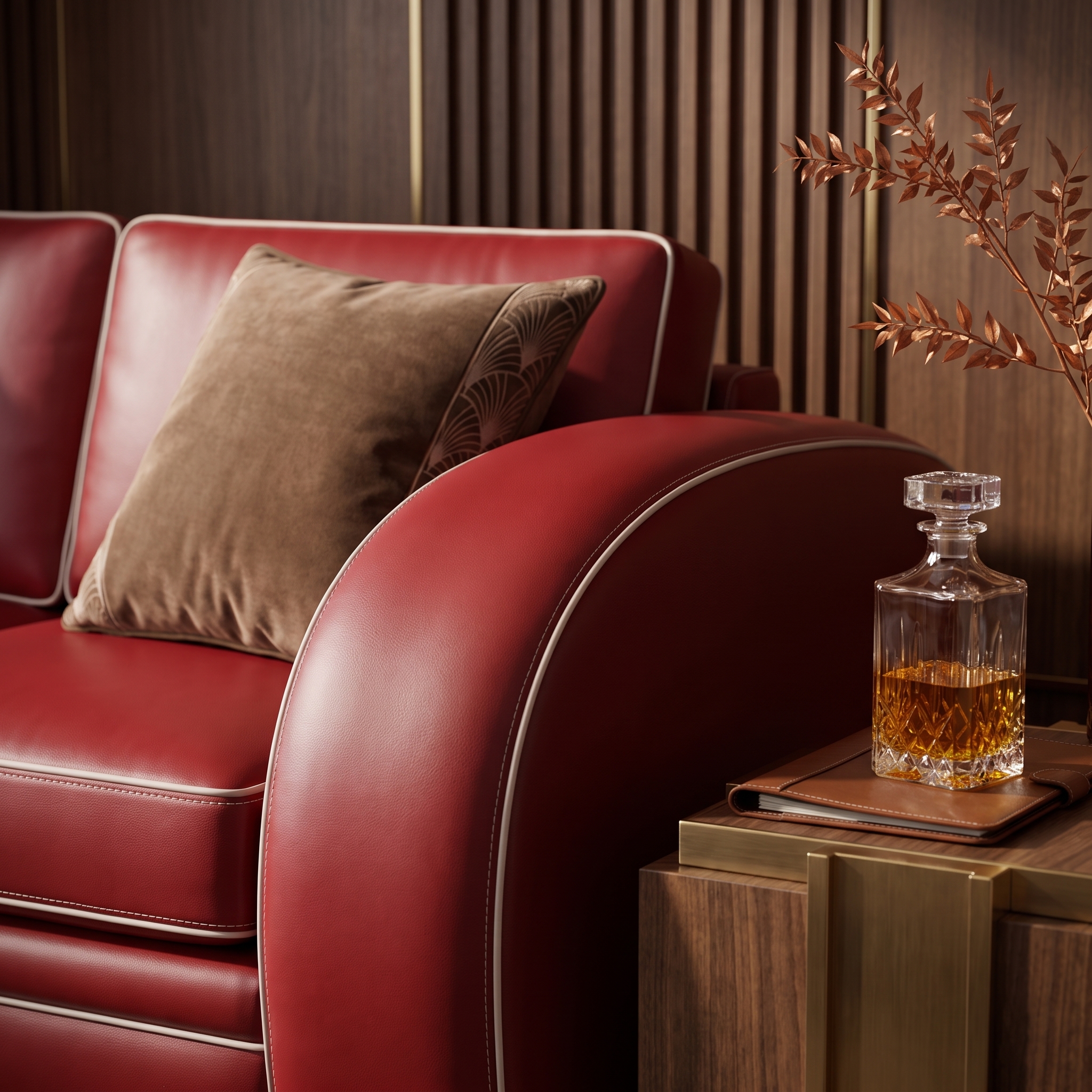
Of all the factors that determine leather sofa lifespan, the leather grade is the single most important. Leather grade refers to where on the hide the leather comes from, how it has been processed, and how much of the natural surface has been retained. The differences are not cosmetic. They fundamentally determine whether the leather will improve with age or crack within years.
Full-grain leather (20 to 30+ years)
Full-grain leather is the top layer of the hide, with all natural markings intact. It is the most durable leather grade available, develops a rich patina over time, and will outlast every other component of the sofa. A full-grain leather sofa, properly maintained, is the only leather grade that genuinely improves rather than degrades with age. At Newman & Bright, our seven leather grades — from the contemporary Contempo to the vintage-feel Rub Off — are all full-grain.
Top-grain leather (15 to 25 years)
Top-grain leather has had the outermost surface sanded away to remove imperfections. It is more uniform in appearance than full-grain but slightly less durable. Top-grain leather is a reasonable middle ground for buyers who want consistency over character — it will not develop the same patina as full-grain, but it will still last 15 to 25 years with proper care.
Corrected-grain leather (5 to 8 years)
Corrected-grain leather has been sanded, embossed and coated to look uniform. It will not develop a patina, it shows wear more quickly than full-grain, and the surface coating will eventually peel. Corrected-grain is acceptable at the entry-level price tier but should not be purchased as a long-term investment. If the listing does not specify the grade, assume corrected-grain or worse.
Bonded leather (3 to 5 years)
Bonded leather is reconstituted from offcuts and glue. It is not really leather in the traditional sense — it is a composite material with a leather-like surface. Bonded leather sofas typically fail within 5 years through peeling, cracking and surface breakdown. They should not be purchased as a long-term furniture investment under any circumstances.
Factor 2: Frame Construction Determines Longevity
The second factor that determines leather sofa lifespan is the frame underneath the leather. A leather sofa’s lifespan is determined less by the leather than by the frame, because the frame is the component that fails first if it is poorly built. A full-grain leather upholstery on a softwood frame will fail when the frame warps or cracks, even if the leather itself is in perfect condition.
NEWMAN & BRIGHT | THE JOURNAL
Kiln-dried hardwood frames (20 to 30+ years)
Kiln-dried hardwood — typically beech, birch or tulipwood — with dowelled and glued joints is the gold standard for sofa frames. The kiln-drying process removes moisture from the timber, preventing warping and cracking over time. Hardwood frames, properly joined, will outlast every other component of the sofa and are typically guaranteed for 10 years by reputable makers.
Softwood frames (8 to 12 years)
Softwood frames — typically pine — are cheaper than hardwood but will warp, crack and weaken within a decade. Softwood frames are common in mid-range and budget sofas, and are the single biggest reason that mid-priced leather sofas fail prematurely. The leather may still be in good condition when the frame gives out, but the sofa is unsalvageable.
Engineered-wood frames (5 to 8 years)
Factor 3: Suspension Affects Comfort and Lifespan
The third factor in leather sofa lifespan is the suspension — the system of springs or webbing that supports the seat cushion. Suspension determines both daily comfort and long-term durability. A sofa with high-quality leather on a hardwood frame will still feel uncomfortable and need replacing if the suspension fails within five years.
Hand-tied coil springs (20+ years)
Hand-tied coil springs are the traditional suspension of the handmade Chesterfield. Each spring is tied by hand to its neighbours, producing a seat that responds individually to weight and movement. Hand-tied springs are the most durable suspension available, and a well-maintained hand-tied sofa will still be comfortable in 20 years.
Pocket-sprung seating (12 to 20 years)
Pocket-sprung seating — individual springs in fabric pockets — is the contemporary equivalent of hand-tied springs. It is the gold standard for modern handmade sofas, providing individual response to weight and excellent long-term comfort. Pocket-sprung seating will typically last 12 to 20 years before any softening becomes noticeable.
Serpentine wire and webbing (5 to 10 years)
Serpentine wire and webbing-only suspensions are acceptable in budget pieces but will sag within a few years of daily use. They are the default suspension in mass-produced sofas, and the primary reason that budget leather sofas feel uncomfortable after 3 to 5 years. The leather may still be intact, but the sofa is no longer comfortable to sit on.
Factor 4: The Care Routine Matters More Than the Leather Grade
The fourth and most underappreciated factor in leather sofa longevity is the care routine. A correctly maintained corrected-grain leather sofa will outlast a poorly maintained full-grain one. The build quality matters, but the care quality matters more. This is the lesson that 125 years of family leather-working has taught us, and it is the single most important point in this guide.
The damage caused by household cleaners
Baby wipes, vinegar, dish soap, antibacterial spray — the four products that British household advice recommends for leather — are all actively destroying thousands of leather sofas across the UK every year. They strip the natural oils from the hide, dry out the leather, and cause cracking within six months. The damage is slow, so the cause and effect are never connected. The buyer assumes the leather was poor quality. The reality is that the leather was killed by the care.
The correct maintenance routine
A leather sofa in daily use should be dusted weekly, vacuumed monthly, cleaned with a dedicated pH-balanced leather cleaner every four to six weeks, and conditioned every three to six months. A leather sofa in occasional use can be cleaned every three months and conditioned twice a year. The complete 7-step cleaning method is detailed in our leather sofa care guide.
Read the complete how to clean a leather sofa guide for the full method, the right products, and the mistakes to avoid.
The role of environment
Environment matters as much as care. A leather sofa placed within 30 centimetres of a radiator will dry out and crack within 3 years regardless of the leather grade. A leather sofa in direct sunlight will fade and stiffen within 5 years. A leather sofa in a humid room will develop mildew. Keep the sofa away from heat sources, out of direct sunlight, and in a room with stable humidity — and the leather will last for decades.
Signs Your Leather Sofa Is Nearing the End of Its Life

If you are trying to assess whether your current sofa needs replacing, there are six clear signs that the leather is nearing the end of its useful life. Not all of them mean the sofa is unsalvageable — some can be addressed with professional leather refinishing — but they are all signals that the remaining lifespan is limited.
• Widespread cracking across the seat cushions Not surface cracks (which are normal) but deep structural cracks through the leather itself.
• Visible peeling or flaking Indicates bonded leather or a failing surface coating — the leather is breaking down at the surface.
• Sagging seat cushions that do not recover Indicates suspension failure rather than leather failure — the sofa may need reupholstering rather than replacing.
• Frame creaking or visible warping Indicates frame failure — the sofa is structurally compromised.
• Hard, brittle or stiff leather Indicates the leather has lost its natural oils and is approaching the point of no return. May be recoverable with intensive conditioning.
• Colour fading in patches Indicates UV damage — the leather will continue to stiffen and crack in the affected areas.
If your sofa is showing two or more of these signs, professional assessment is worth seeking before replacement. A genuine handmade leather sofa on a hardwood frame can often be reupholstered, restoring the leather without replacing the frame — a service that costs around 30 to 50 per cent of a new equivalent, and that extends the life of the sofa by another 15 to 20 years.
How to Extend the Life of Your Leather Sofa
The single most effective answer is: as long as you maintain them. A well-maintained full-grain leather sofa on a hardwood frame can last 30 years. The same sofa, badly maintained, will last 5. The care routine is the variable that determines longevity, and it is entirely within the owner’s control.
Establish a regular cleaning routine
Dust weekly with a soft, dry microfibre cloth. Vacuum monthly with a soft brush attachment. Clean every four to six weeks with a dedicated pH-balanced leather cleaner. Condition every three to six months with a dedicated leather conditioner. The complete routine takes around 20 minutes per month and will extend the life of your leather sofa by a decade or more.
Use the right products
Never use baby wipes, vinegar, dish soap, antibacterial spray, saddle soap or household cleaners on a leather sofa. Always use dedicated, pH-balanced leather care products formulated specifically for upholstered leather. The chemistry is real. The cost of the right product is significantly less than the cost of replacing a cracked leather sofa.
Position the sofa correctly
Keep the sofa at least 30 centimetres away from radiators, fires and direct heat sources. Keep it out of direct sunlight — particularly south-facing windows. Maintain stable room humidity. A leather sofa in a well-positioned room will last twice as long as the same sofa in a poorly-positioned room.
Reupholster rather than replace
If the leather is reaching the end of its life but the frame is sound, consider reupholstering rather than replacing. A genuine handmade sofa on a kiln-dried hardwood frame can be reupholstered in new full-grain leather for 30 to 50 per cent of the cost of a new equivalent, extending its life by another 15 to 20 years. This is the single most sustainable decision a sofa owner can make — and one of the most economic.
Frequently Asked Questions
A well-made leather sofa in full-grain leather on a kiln-dried hardwood frame, properly maintained, should last 20 to 30 years. A mass-produced leather sofa in corrected-grain or bonded leather on a softwood or engineered-wood frame will typically last 5 to 8 years. The answer depends on the leather grade, the frame, the suspension, and the care routine — not just the price tag.
How long do leather sofas last with daily use? (Answer below)
With daily use, a well-made full-grain leather sofa on a hardwood frame should still last 20 to 30 years, provided the care routine is maintained. Daily use without proper maintenance will reduce the lifespan to 8 to 12 years. The variable is not the use itself, but the care that follows it.
How can I tell how old a leather sofa is?
The age of a leather sofa can be estimated by examining the patina (which develops over 3 to 5 years of use), the wear pattern on the seat cushions, the condition of the suspension, and the build quality of the frame. A leather sofa with a deep, even patina and a solid, creak-free frame is typically 10 to 20 years old. A sofa with deep structural cracks or a sagging frame is typically past its useful life.
Is a leather sofa a good investment?
Yes, if it is a genuine handmade leather sofa in full-grain leather on a hardwood frame. The cost-per-year of a £2,500 handmade sofa that lasts 25 years is £100 per year. The cost-per-year of a £700 mass-produced sofa replaced every 5 years is £140 per year. The maths is genuinely surprising to most buyers — a quality leather sofa is not just a better piece of furniture, it is also a better economic decision.
Can a leather sofa be reupholstered?
Yes, if the frame is sound. A genuine handmade sofa on a kiln-dried hardwood frame can be reupholstered in new full-grain leather for 30 to 50 per cent of the cost of a new equivalent, extending its life by another 15 to 20 years. Reupholstering is one of the most sustainable decisions a sofa owner can make, and one of the most economic. Mass-produced sofas on engineered-wood frames are generally not worth reupholstering.
Why do some leather sofas crack and others do not?
Cracking is caused by the leather drying out and losing its natural oils. The three main causes are: the use of household cleaners (baby wipes, vinegar, dish soap) which strip natural oils; placement near radiators or in direct sunlight which dries the leather out; and lack of conditioning. A full-grain leather sofa that is properly conditioned every three to six months, kept away from heat sources, and cleaned only with dedicated leather products will not crack.
Conclusion: It Depends on You
The honest answer to how long do leather sofas last is that it depends on the build, the leather grade, and — more than anything — the care routine. A genuine handmade leather sofa in full-grain leather, on a kiln-dried hardwood frame, with hand-tied springs and a consistent care routine, will last 20 to 30 years and develop a patina that improves rather than degrades with age. A mass-produced leather sofa in corrected-grain or bonded leather, on an engineered-wood frame, cleaned with household products, will last 5 to 8 years and end its life in landfill.
If you are buying a leather sofa as an investment — a piece of furniture you want to pass on to the next generation — the four variables to interrogate are the leather grade, the frame construction, the suspension, and the warranty. The single best test of whether a maker is genuinely building for longevity is whether they warranty the frame for at least 10 years and cover accidental damage for at least 5.
If you would like to discuss the right leather grade for your home — or understand how long do leather sofas last with the right build and care — browse our seven named leather grades, or read our independent guide to the best leather sofas in the UK for 2026, you can also book a private viewing at the Worsley workshop or call the sales team directly on 0161 667 9560.