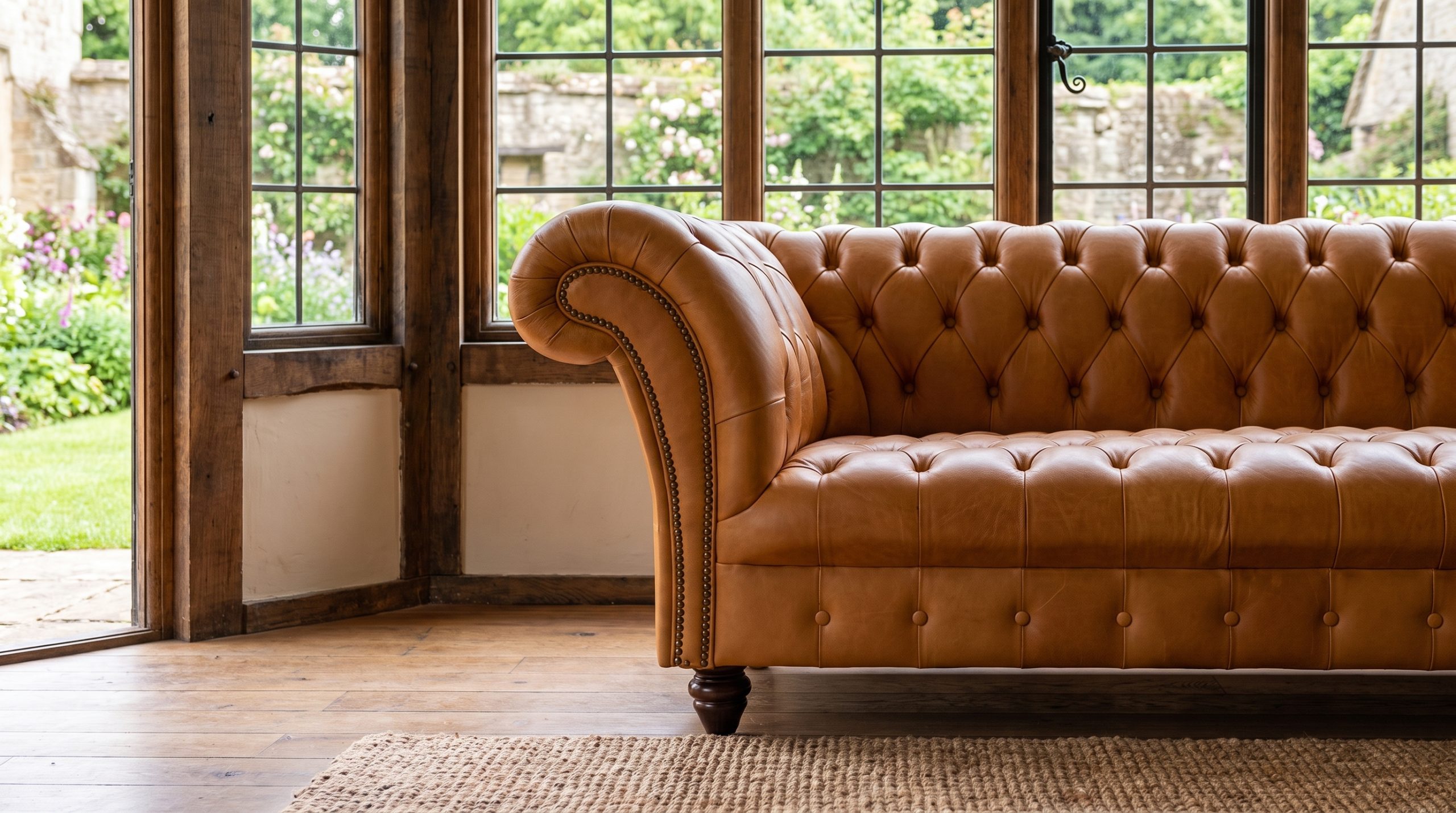
A practical styling guide for interior designers – from specifying the right piece to
anchoring the room and layering around it
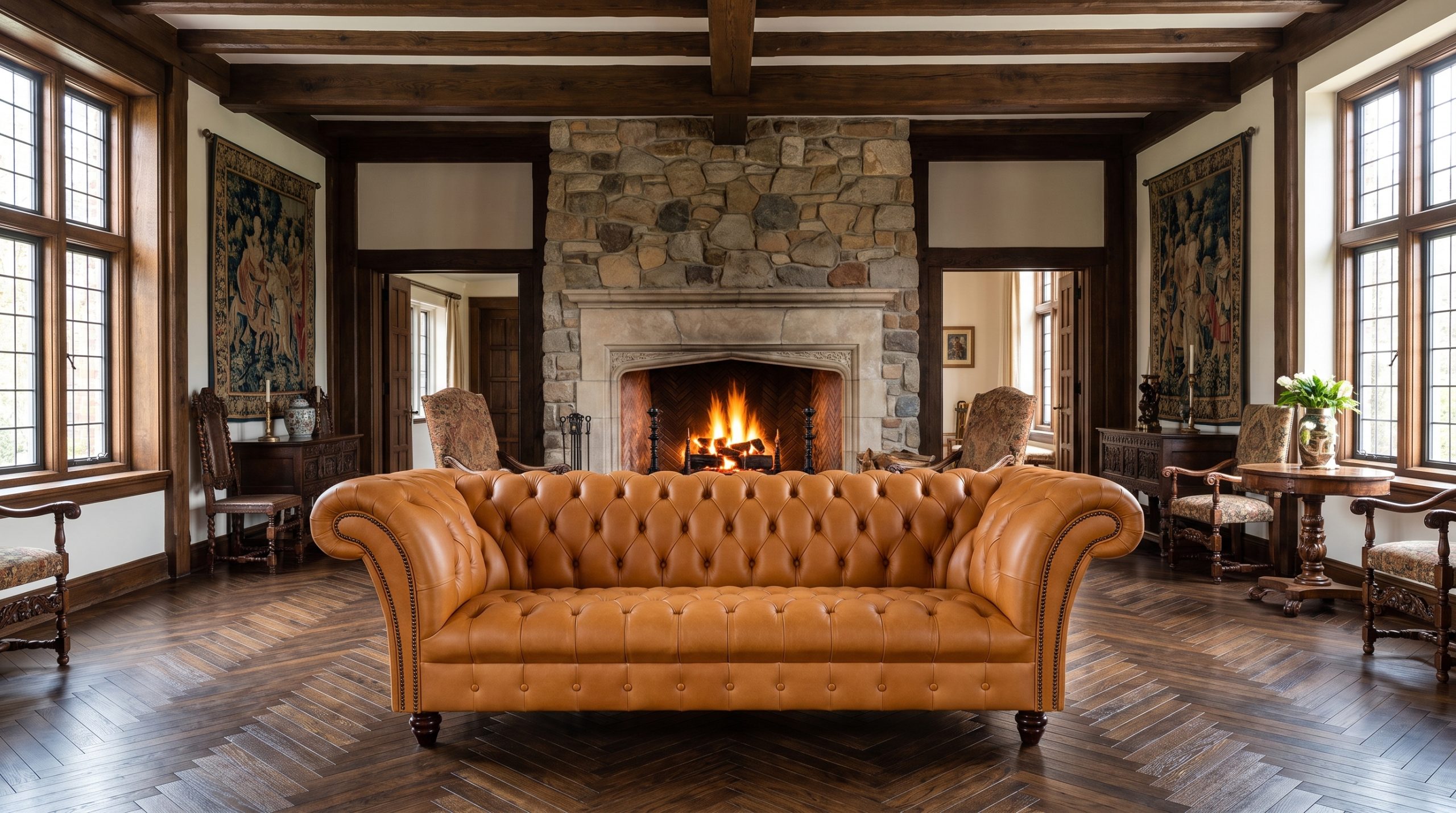
Few pieces carry a room the way a chesterfield sofa does. With its deep buttoning, low rolled arms and unmistakable silhouette, it has been the quietly confident centrepiece of British interiors for nearly two centuries — and it is enjoying a renewed moment in some of the most interesting living rooms being designed
today. For interior designers, the appeal is obvious: a well-made chesterfield sofa gives a project instant anchor, lending gravitas to a contemporary space and tying a period room back to its architectural roots.
The trick, as any experienced stylist will tell you, is in the styling. A chesterfield sofa placed without thought can feel heavy or nostalgic; placed with intent, it becomes the most photographed corner of the house. This guide walks through everything a designer needs to consider when specifying and styling a chesterfield sofa in a
modern British living room — from proportions and fabric choices to placement, layering, and the three room archetypes where the piece truly sings. Whether you are sourcing for a Georgian townhouse in Bath or a converted warehouse in Manchester, the principles below will help you make the most of this most British of statements
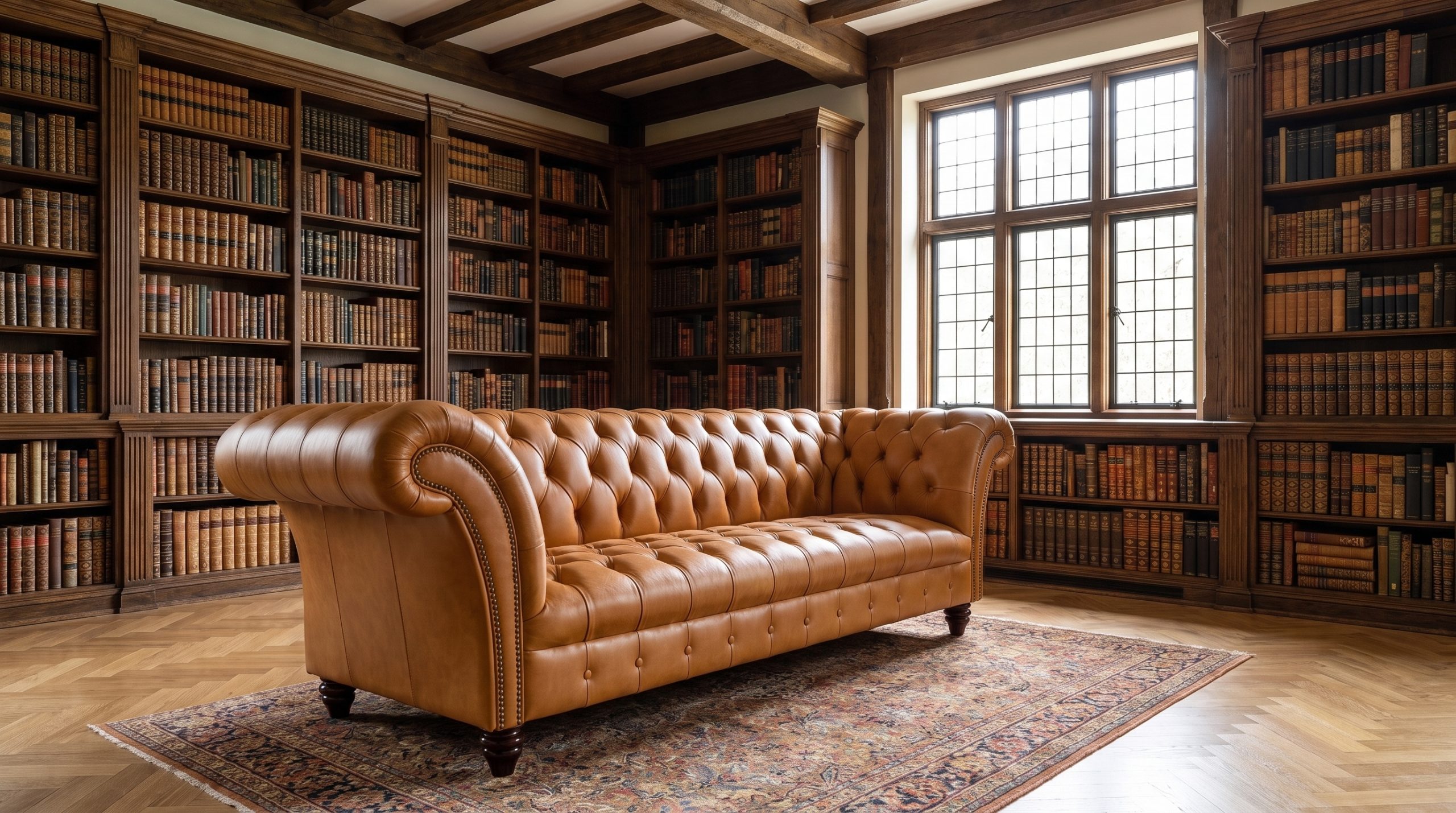
Why the Chesterfield Sofa Endures as the Designer’s Statement Piece
The chesterfield sofa has been in continuous production since the early nineteenth century, and that longevity is not an accident of nostalgia. It survives because the design solves a problem every stylist still faces: how to give a room a focal point that feels both authoritative and inviting. The deep buttoning creates shadow and texture; the low rolled arms frame the sitter without enclosing them; the generous proportions read as generous from any angle. These are not period quirks. They are design decisions that happen to have been made two hundred years before the term ‘feature wall’ was coined.
For interior designers working in modern British homes, that heritage is an asset rather than a constraint. A chesterfield sofa brings a layer of craft and storytelling to spaces that can otherwise feel generic — particularly new-builds and open-plan conversions where architectural detail is thin. Pair it with contemporary art, a sculptural floor lamp or a pale limewashed wall, and the contrast does the work: the sofa reads as a curated antique rather than a reproduction, and the room around it suddenly looks considered. Crucially, a handcrafted chesterfield sofa from a British workshop such as Newman & Bright can be tailored to the project. Seat depth, back height, arm width and fabric can all be specified to suit the room and the client —which means designers are no longer fitting a room around a sofa, but fitting the sofa to the room.
The Designer’s Brief: Specifying the Right Chesterfield Sofa
Scale, Proportion & Room Volume
The most common mistake with a chesterfield sofa is undersizing it. Because the silhouette is low and horizontal, a piece that is too small for the room will read as apologetic rather than statement. As a rule of thumb, allow at least 80cm of clearance on every side for circulation, and choose a length that occupies roughly two-thirds of the longest wall (or the equivalent footprint if floated). Ceiling height matters too: in rooms under 2.4m, opt for a lower-back chesterfield to preserve sightlines.
Leather vs Velvet vs Linen — A Quick Spec Guide
The material you specify will do more than anything else to determine whether the finished room reads traditional, transitional or contemporary. Full-aniline leather softens and patinas over decades, making it the right call for high-traffic family rooms and projects where the client wants a piece that ages with them.
Velvet — particularly in deep greens, blues and burgundies — pushes the chesterfield towards contemporary glamour and is the choice for formal living rooms. Linen and linen-blend weaves relax the silhouette completely, making them the right option for coastal, Scandinavian or country schemes.
Colour Direction for Modern British Interiors
The current wave of British interiors favours muted, considered palettes, and the chesterfield sofa is no exception. Designers are specifying petrol blue, olive, oxblood, ochre and warm putty in place of the brownsand burgundies of a decade ago. These tones sit comfortably against pale oak floors, limewashed walls and
brass or blackened-steel hardware — the material palette that defines the modern British look. When in doubt,swatch in the room itself: a chesterfield sofa is a large surface area, and a colour that looks right on a screen will
often read very differently in north light
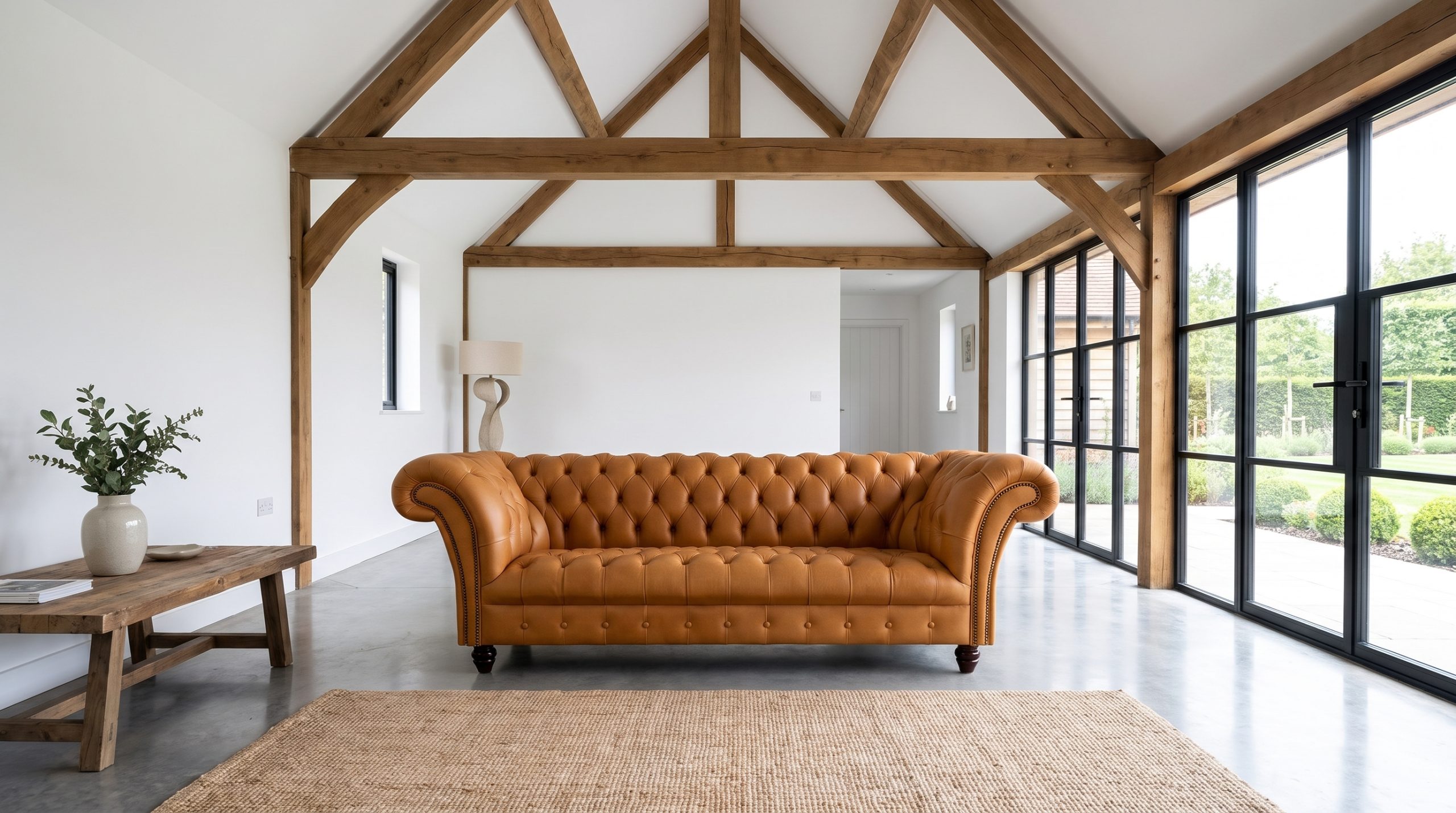
Chesterfield Sofa vs Other Statement Sofas — At a Glance
Designers are often asked by clients why a chesterfield sofa should be the statement piece rather than a contemporary designer sofa, a mid-century piece or a modular corner unit. The honest answer is that each has
its place — but the chesterfield sofa is the only one that brings both silhouette and craft heritage to a room. The table below summarises how the four most common statement sofa types compare across the criteria that matter
most on a real project.
| Sofa Type | Silhouette & Presence | Formality | Ideal Room | Designer Notes |
| Chesterfield Sofa | Low, rolled arms, deep buttoning. Strong horizontal presence | Traditional to transitiona | Period townhouse, formal living room, loft conversion | Best when tailored to the project. Brings craft heritage and silhouette. |
| Mid-Century Mode | Low, slimline, splayed legs. Visual lightness | Casual contemporary | 1960s properties, scandi schemes, apartments | Pairs well with a chesterfield as accent seating. |
| Modular Corner | Generous L or U shape. Ground-hugging | Casual, family-oriented | Open-plan family rooms, basements | Useful for zoning but lacks the focal-point presence of a chesterfield. |
| Contemporary Designer | Sculptural, often asymmetric. Often a single bold form. | Designer contemporary | Architect-led new-builds, gallery interiors | Strong statement but rarely carries a room alone; needs curated context. |
Read across the row that matches the project: if the room needs craft heritage and silhouette, the chesterfield sofa is the answer; if the room is small or architect-led contemporary, the chesterfield may be better deployed as a single accent chair. In our experience, the most successful modern British living rooms pair a chesterfield sofa as the centrepiece with one secondary sofa type — not two chesterfields in the same space.
Anchoring the Room: Placement & Layout
Float the Sofa — When and Why
Floating a chesterfield sofa in the middle of a living room is the boldest move a designer can make with the piece, and in the right room it pays off spectacularly. It works best in open-plan spaces where a wall placement would leave the seating island feeling disconnected from the rest of the zone. Allow a generous rug to anchor the sofa — at least 30cm of rug extending beyond the front legs on all sides — and use the back of the sofa as a visual divider, perhaps with a low console table and a pair of lamps behind it
Wall Placement Done Right
Against-the-wall placement is not a compromise; in smaller rooms it is the correct answer. The trick is to treat the wall behind the sofa as part of the composition. A single overscaled piece of art, a gallery wall of framed prints, or a tonal paint colour that contrasts with the sofa will prevent the piece from reading as pushed-back. Leave 5–10cm between the sofa back and the wall to allow the rolled arms to breathe.
Pairing with Rugs and Coffee Tables
A chesterfield sofa pairs best with a low, generous coffee table — think travertine, oak or a vintage trunk — that sits close enough to use but leaves 40–50cm of clearance for legs. Avoid glass-topped tables, which feel incongruent against the sofa’s solid presence. Rug choice matters as much as the table: a vintage Persian or flatweave grounds the room with pattern, while a plain wool or jute rug lets the sofa do the talking.
ayering Around the Statement Piece
Accent Seating That Complements, Not Competes
A chesterfield sofa is a strong character; the seating around it should support, not rival. A pair of slender mid-century chairs in walnut and leather, a sculptural lounge chair, or a tightly upholstered ottoman will all work, provided they share a tonal or material link with the sofa. Avoid placing a second buttoned or rolled-arm piece in the same room — two chesterfields fight each other, and the eye cannot settle.
Lighting Layers for Depth
A statement sofa needs three layers of light to look its best in the evening: ambient (dimmed ceiling spots or a flush fitting), task (a floor lamp beside the sofa for reading) and accent (a table lamp on a console behind the sofa to throw light up into the buttoning). The accent layer is the one most often forgotten, and it is the one that makes the chesterfield sofa look expensive at night — the buttons catch the light and the sofa glows.
Cushions, Throws and Tactile Contrast
Dress the sofa sparingly. Two or three cushions in a contrasting texture — linen on velvet, or wool on leather — are more effective than a row of matching cushions that flatten the silhouette. A single throw, folded neatly along one arm, adds the lived-in softness that prevents a chesterfield sofa from looking like a museum piece.
Styling the Chesterfield Sofa Across Three British Living Room Archetypes
The Period Townhouse
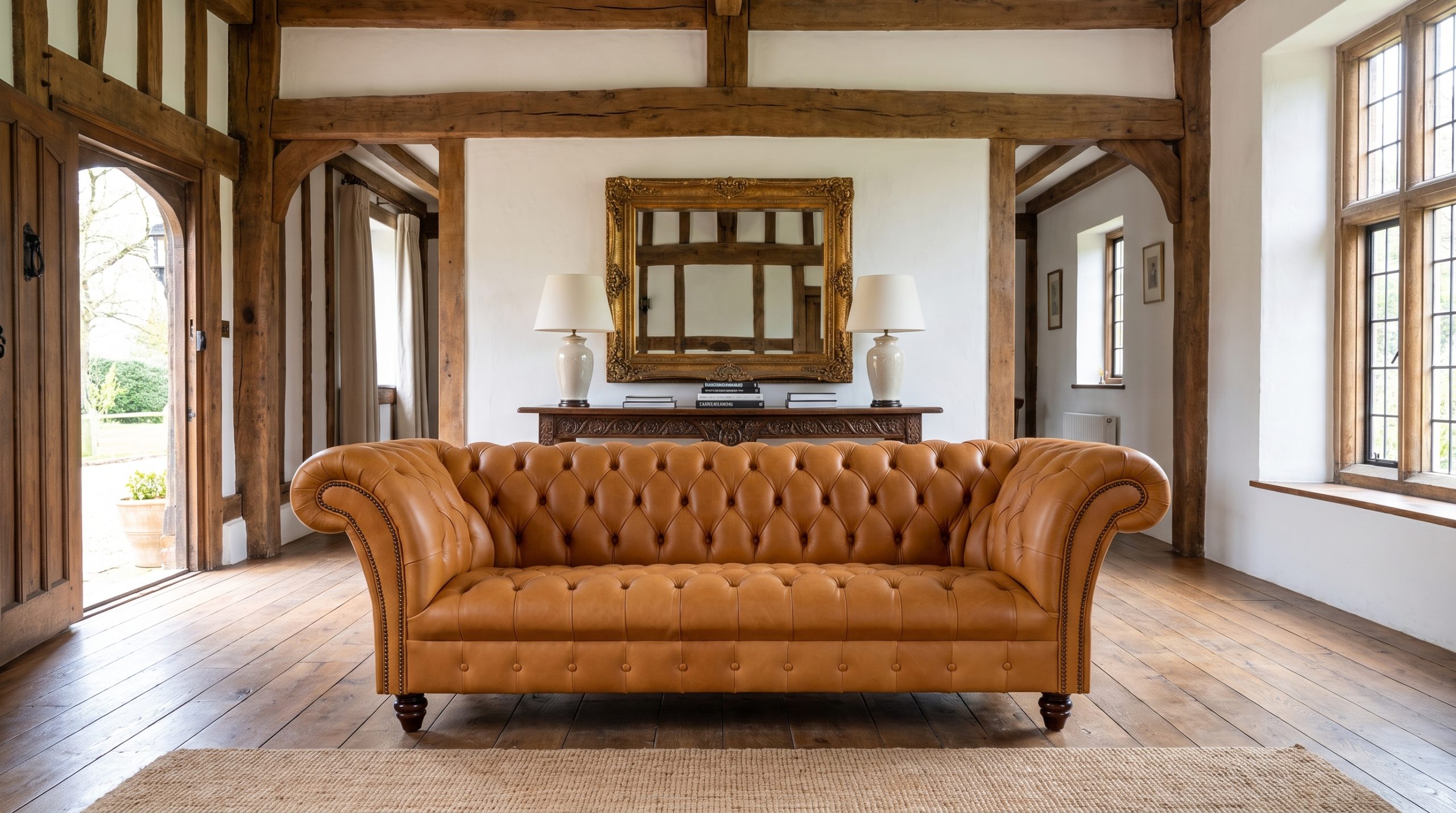
In a Victorian or Georgian living room, the chesterfield sofa is in its natural habitat. Specify a traditional full-aniline leather or a deep damask velvet, pair with a Persian rug, a marble fireplace and a brass floor lamp, and the room will feel restored rather than decorated. The risk is over-traditionalising: anchor the room with one contemporary piece — a large abstract painting, a sculptural light, or a modern coffee table — to keep the scheme feeling current and the client feeling like they live in 2026, not 1897.
The Contemporary New-Build
New-build living rooms often lack architectural interest, which is precisely why a chesterfield sofa is such a useful specifying tool. Choose a linen or linen-blend cover in a soft neutral, pair with pale oak flooring, a large-scale textured rug and a low, modern coffee table, and the sofa becomes the room’s architectural feature.
Keep walls pale and uncluttered, and let the sofa’s buttoning and rolled arms supply the detail the architecture is missing.
The Open-Plan Loft Conversion
In a converted warehouse or industrial loft, a chesterfield sofa provides the warmth and softness that bare brick and steel cannot. An oxblood or petrol blue velvet against raw brick is one of the great British interior
combinations; pair with a vintage rug, a leather club chair, and a sculptural floor lamp to create a seating zone that feels deliberate within the larger open space. Specify a generous three-seater or two-seater-plus-chaise — small proportions will be swallowed in a loft.
The Designer’s Buying Checklist
Before specifying a chesterfield sofa for any project, run through this list with the client. It covers the practical questions that catch designers out between sign-off and delivery, and it doubles as a useful client-facing document for managing expectations on lead time, access and aftercare.
1 Measure the room twice — including doorways, stairs and lift access for delivery.
2 Confirm ceiling height and choose a back height that does not interrupt sightlines.
3 Decide between leather, velvet or linen based on use, light and family circumstances.
4 Swatch fabric in the actual room — never specify from a screen.
5 Confirm the seat depth suits the client’s height and seating style (lounge vs upright).
6 Check whether the client wants a fixed or loose-cover finish.
7 Verify the workshop offers hand-tied springs and hardwood frame construction.
8 Ask about lead times — bespoke British-made pieces typically run 8–12 weeks.
9 Request a fabric protector treatment for family homes and high-traffic spaces.
10 Plan the delivery route — a chesterfield sofa is a single rigid piece and will not bend
Frequently Asked Questions
Q. Is a chesterfield sofa a good choice for a modern living room?
Yes — and increasingly, that is exactly how interior designers are using it. The contrast between the chesterfield sofa’s buttoned, traditional silhouette and a modern, pared-back room is what makes the combination work.
Specify the sofa in a contemporary fabric such as linen or a muted velvet, keep the surrounding furniture low and clean-lined, and the piece reads as a curated antique in a modern setting rather than a nostalgic relic.
Q. What is the best fabric for a chesterfield sofa in a family home?
For family use, full-aniline or semi-aniline leather is the most forgiving option — it ages, cleans easily and shrugs off spills. If the client prefers fabric, a tightly woven wool or a stain-treated linen blend will perform better than velvet. Always specify a fabric protector treatment, and avoid pale solids in high-traffic rooms.
Q. How long does a bespoke chesterfield sofa take to make?
A handcrafted chesterfield sofa from a British workshop such as Newman & Bright typically takes 8–12 weeks from approval of drawings and fabric to delivery. Lead times can extend in peak periods, so designers should factor this into the project programme from the outset and communicate it clearly to the client.
Q. Can a chesterfield sofa work in a small living room?
Yes, if it is specified carefully. Choose a two-seater rather than a three-seater, opt for a low-back version to preserve sightlines, and select a fabric that blends tonally with the walls. Float the sofa or place it against the wall with a tight 5cm gap to allow the arms to breathe, and keep the rest of the furniture visually light.
Q. How do I clean and maintain a chesterfield sofa?
Leather chesterfields should be wiped with a damp cloth and reconditioned twice a year with a quality leather balm. Fabric chesterfields should be vacuumed weekly on a low setting, professionally cleaned annually, and treated immediately for spills. Rotate cushions monthly where possible to distribute wear evenly.
Q. What is the difference between a chesterfield sofa and a showwood sofa?
A chesterfield sofa is defined by its deep buttoning, low rolled arms and fully upholstered silhouette. A showwood sofa exposes a polished wooden frame — typically mahogany or beech — along the arms, back and legs. Both are traditional British forms, and many Newman & Bright pieces combine chesterfield-style buttoning with showwood detailing for designers who want both characters in one piece.
A chesterfield sofa is one of the few pieces of furniture that improves with age, both physically and stylistically. Specified well and styled with intent, it will outlast trends, clients and even houses — many of the chesterfield sofas made in Newman & Bright’s Worsley workshop today will still be the centre of someone’s living room in 2070. For interior designers, that longevity is the point. The piece is not just a styling decision; it is a quiet argument for craft, for British making, and for rooms that are designed to be lived in for decades rather than
seasons.