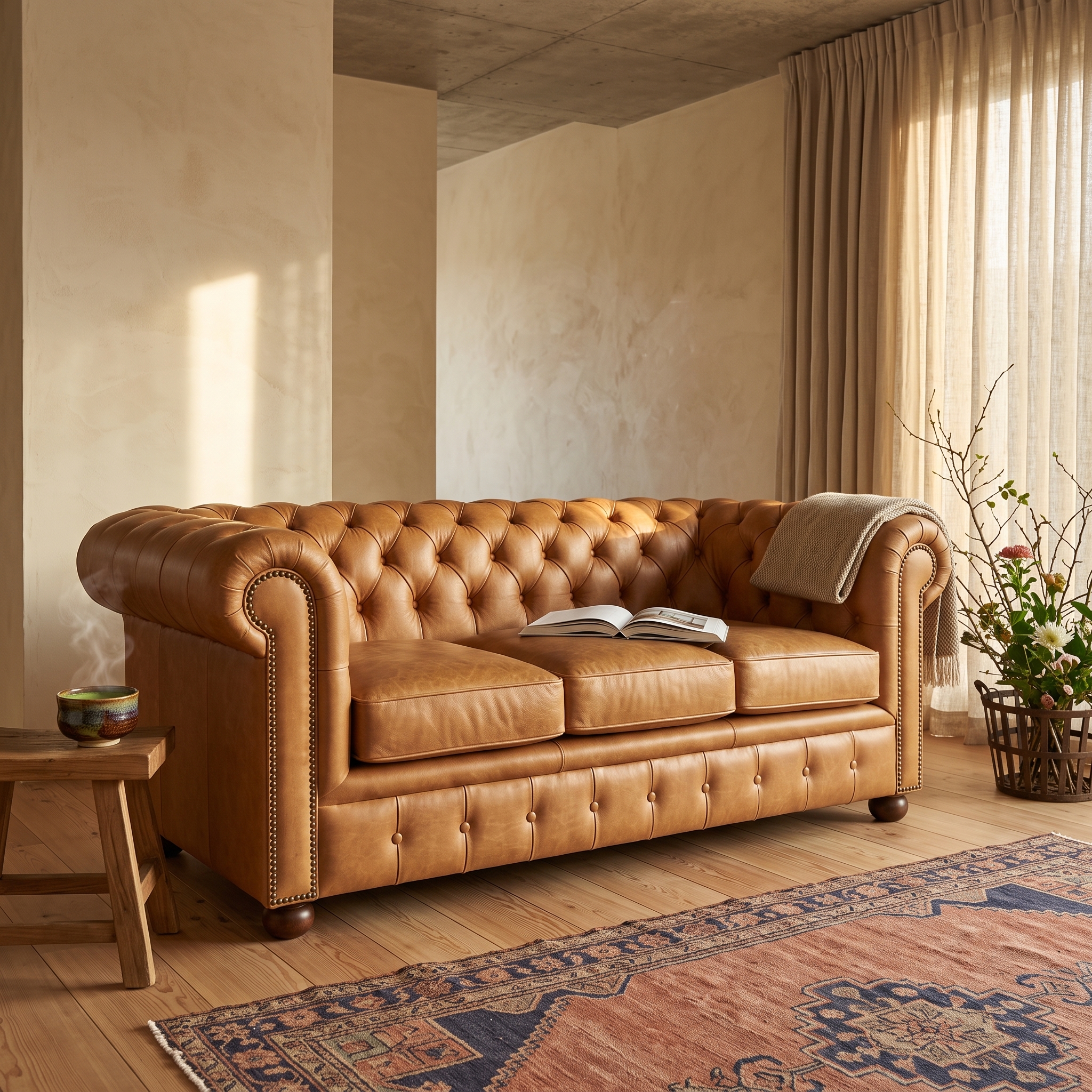
How to clean a leather sofa without damaging the hide — the complete care method from a workshop with 125 years of leather-working experience.
Why Leather Sofa Care Matters
If you are searching for how to clean a leather sofa properly, the stakes are higher than you might expect. A leather sofa is not just a piece of furniture — it is a natural hide that responds to care, neglect, weather, and the products you use on it. Cleaned correctly, a full-grain leather sofa will develop a rich patina over a decade of use and last 20 to 30 years. Cleaned incorrectly, the same sofa can crack, fade or stain permanently within a single afternoon.
At Newman & Bright, our leather-working lineage stretches back to 1897 through the historic Neumann Leathers family business. We work with seven named leather grades — from the smooth contemporary Contempo to the rubbed-down, vintage-feel Rub Off — and every one of them requires a slightly different care approach. The guidance below is the same method we give to customers who order from our workshop, distilled into a complete care routine you can apply to any leather sofa in your home.
The most important thing to understand before you start is that leather is a natural material, not a synthetic surface. It needs conditioning, not just cleaning. It needs gentle, dedicated products, not household chemicals. And it needs patience — a leather sofa cleaned properly in twenty minutes will look better, age better, and feel better than one cleaned aggressively in five.
What You Will Need to Clean a Leather Sofa
Before you start, gather the right tools. The single biggest mistake people make when cleaning leather is using whatever is under the kitchen sink. Household cleaners, dish soap, baby wipes, vinegar solutions and antibacterial sprays will all damage a leather hide over time — some immediately, some cumulatively.
Soft, dry microfibre cloths (x3): For dusting, cleaning and buffing — avoid paper towels, which can scratch
Dedicated leather cleaner: A pH-balanced formula specifically designed for upholstered leather — not shoe cleaner, not saddle soap
Leather conditioner: Applied after cleaning to restore natural oils and prevent cracking
Soft-bristled brush: For working cleaner into seams and buttoned areas without abrasion
Distilled water: Hard tap water can leave mineral deposits on the leather surface
Vacuum with soft brush attachment: For removing dust and debris from crevices before cleaning
For premium leather care products, we recommend Leather Master cleaners and conditioners, the same brand we supply to our own workshop customers.
How to Clean a Leather Sofa: The 7-Step Method
The complete cleaning method takes around 20 to 30 minutes per two-seater, and should be carried out every four to six weeks for daily-use sofas, or every three months for occasional-use pieces. Follow the steps in order — skipping the vacuum stage, or applying conditioner before cleaner, will produce visibly worse results.
Step 1 — Vacuum thoroughly
Use a vacuum with a soft brush attachment to remove dust, crumbs and debris from the seat cushions, backrest, arm crevices and buttoned areas. Dust acts as an abrasive when combined with moisture — if you skip this step, the cleaning stage will grind dust into the leather and produce microscopic scratches that dull the surface over time.
Step 2 — Dry dust with a microfibre cloth
Using a dry microfibre cloth, wipe the entire leather surface in a gentle circular motion. This removes surface dust the vacuum has missed, and lifts any loose particles from the leather grain. Pay particular attention to the seat cushions and arm tops, where body oils and dust accumulate most heavily.
Before applying any leather cleaner to the visible surface, test it on a hidden area — the underside of a seat cushion, or the back of the sofa if it sits against a wall. Apply a small amount of cleaner, wait five minutes, and check for colour transfer or surface dulling. If the leather responds well, proceed. If it darkens, fades or leaves a sticky residue, stop and contact the manufacturer.
Step 4 — Apply cleaner to the cloth, never directly to the leather
Apply a small amount of dedicated leather cleaner to a clean microfibre cloth — never spray or pour directly onto the leather surface. Working in small sections of around 30 centimetres square, gently clean the leather in a circular motion. Avoid scrubbing — the cleaner should lift dirt through gentle chemical action, not physical force.
Step 5 — Work into seams and buttoned areas with a soft brush

For buttoned Chesterfields, piped seams and crevices, use a soft-bristled brush to work the cleaner into areas the cloth cannot reach. Use gentle, circular motions — the goal is to lift dirt from the seam, not to scrub it deeper in. A clean toothbrush works well, provided the bristles are soft and have not been used with other cleaning products.
Step 6 — Wipe away residue with a damp cloth
Once the entire sofa has been cleaned, wipe away any residual cleaner using a clean microfibre cloth lightly dampened with distilled water. Work in the same circular motion, and change cloths if the first becomes soiled. The leather should now look visibly cleaner, with its natural grain visible rather than obscured by a layer of dust and body oils.
Step 7 — Allow to dry fully, then apply leather conditioner
Allow the leather to air-dry fully — usually 30 to 60 minutes — before applying a dedicated leather conditioner. Conditioning is the single most important step in maintaining leather, because cleaning removes natural oils alongside dirt. Apply a small amount of conditioner to a clean cloth, work into the leather in circular motions, and allow it to absorb for 15 minutes before buffing off any excess with a dry cloth.
Cleaning Different Leather Types
The method above is the general approach, but different leather grades require slightly different care. At Newman & Bright, we work with seven named leather grades — each with its own character, patina and care requirements. The most common grades you will encounter are below.
Full-grain leather (Contempo, Shelly)
Full-grain leather is the most durable and the easiest to clean. The natural grain is intact, which means the leather resists stains well and develops a rich patina over time. Clean with a dedicated leather cleaner every four to six weeks, condition every three to six months, and the leather will improve rather than degrade with age.
Antique-finish leather (Rub Off, Old English)
Antique-finish leathers have a rubbed-down top layer that gives them a vintage, two-tone appearance. Clean gently — avoid aggressive rubbing, which can lift the antique finish and produce uneven patches. Use a dedicated leather cleaner and a soft cloth, and condition with a light hand to preserve the rubbed effect.
Semi-aniline and pull-up leather (Selvaggio, Vele)
Semi-aniline and pull-up leathers are more sensitive to scratches and water marks, but they recover beautifully with conditioning. Light scratches can be massaged out with clean fingers — the warmth of your hand will release natural oils and the scratch will fade. Clean with a dedicated leather cleaner, condition more frequently (every two to three months), and embrace the natural patina as part of the leather’s character.
Corrected-grain leather
Corrected-grain leather has been sanded and embossed for uniformity, which makes it more resistant to stains but less able to develop a patina. Clean with a dedicated leather cleaner every four to six weeks, condition every six months, and avoid abrasive brushes which can scratch the embossed surface.
Removing Common Leather Sofa Stains
The cleaning method changes when stains are involved. The most common household stains — ink, food, grease, pet marks and water rings — each require a specific approach. Act quickly: the sooner you treat a stain, the more likely it is to lift completely.
Ink and pen marks
Ink is one of the most difficult stains to remove from leather. Do not scrub — this will spread the ink further. Dab the area gently with a dedicated leather cleaner, working from the outside of the stain inward to prevent spreading. For stubborn ink marks, contact a professional leather technician rather than risk permanent damage.
Food and drink spills
Blot — never rub — with a clean, dry cloth to absorb as much liquid as possible. Apply a dedicated leather cleaner with a damp cloth, working in a circular motion. For oily food spills, leave a layer of cornflour or talcum powder on the stain overnight to absorb the oil before cleaning.
Grease and oil
Grease from food, hair products or hands is the most common cause of dark patches on a leather sofa. Cover the stain with cornflour or talcum powder, leave for several hours or overnight, then brush away gently. The powder will absorb the oil — repeat if necessary, then clean with a dedicated leather cleaner.
Water marks and rings
Water marks occur when water dries unevenly on the leather surface. To remove, dampen the entire panel — not just the stained area — with distilled water on a clean cloth, then allow to dry naturally. This evens out the moisture distribution and prevents the visible ring from forming.
Pet marks and scratches
For pet urine, blot immediately with a clean cloth, then clean with a dedicated leather cleaner. For light scratches, massage the area with clean fingers — the warmth of your hand releases natural oils and the scratch will often fade. For deeper scratches, a professional leather technician can re-finish the area.
Common Mistakes to Avoid When Cleaning a Leather Sofa
When cleaning a leather sofa, the mistakes are often more important than the method. These are the seven errors we see most frequently — each one capable of permanently damaging a leather hide that would otherwise last for decades.
• Using household cleaners Dish soap, window cleaner, antibacterial spray and baby wipes all contain chemicals that strip the natural oils from leather, causing it to crack within months.
• Scrubbing aggressively Leather responds to gentle chemical action, not physical force. Scrubbing produces microscopic scratches that dull the surface and create a dull, matted appearance.
• Applying cleaner directly to the leather Always apply to a cloth first. Direct application can saturate the leather, leave streaks and damage seams.
• Skipping the conditioning stage Cleaning removes natural oils alongside dirt. Without conditioning, the leather will dry out and crack within six months.
• Using hard tap water Hard water contains minerals that leave chalky deposits on the leather surface. Always use distilled water for damp cleaning.
• Placing leather in direct sunlight to dry Direct sunlight fades leather and dries it out unevenly. Always air-dry naturally, away from radiators and windows.
• Using hairdryers or heat guns Heat dries out leather rapidly and causes irreversible cracking. Never use heat to speed up drying.
The Leather Sofa Maintenance Routine
The best approach to leather sofa care is to establish a regular maintenance routine, rather than waiting for visible dirt to appear. A consistent routine takes 20 minutes a month and will extend the life of your leather sofa by a decade or more.
Weekly
Dust the entire leather surface with a dry microfibre cloth, paying particular attention to seat cushions, arm tops and the headrest area. This takes two minutes and prevents the build-up of body oils that cause dark patches over time.
Monthly
Vacuum the entire sofa with a soft brush attachment, focusing on crevices, buttoned areas and seat seam lines. This removes dust and debris before it can be ground into the leather through daily use.
Every 4 to 6 weeks
Complete the full 7-step cleaning method described above. This is the core of the routine — the cleaning and conditioning that keeps the leather supple, clean and developing its natural patina.
Every 6 months
Apply a second conditioning treatment, even if no cleaning is required. Leather in centrally-heated British homes dries out faster than most owners realise, and a six-monthly conditioning schedule prevents the cracking that ruins otherwise well-maintained hides.
How to Clean a Leather Sofa: Frequently Asked Questions
Can I use baby wipes to clean a leather sofa?
No. Baby wipes contain alcohol, fragrances and moisturising agents that strip the natural oils from leather and cause it to dry out and crack. The single most common mistake people make is reaching for baby wipes — they appear gentle, but they are one of the most damaging household products for leather. Always use a dedicated leather cleaner.
How often should I clean a leather sofa?
A leather sofa in daily use should be dusted weekly, vacuumed monthly, and cleaned with a dedicated leather cleaner every four to six weeks. Condition every three to six months. A leather sofa in occasional use — a spare room, for example — can be cleaned every three months and conditioned twice a year.
Can I use vinegar to clean a leather sofa?
No. Vinegar is acidic and will strip the protective finish from corrected-grain leather, and will dry out full-grain leather rapidly. The pH of vinegar is incompatible with the natural pH of leather. Use a dedicated, pH-balanced leather cleaner — these are formulated specifically to lift dirt without damaging the hide.
What is the best cleaner for a leather sofa?
A dedicated, pH-balanced leather cleaner formulated specifically for upholstered leather. We recommend Leather Master cleaners and conditioners, the same brand we supply to our own workshop customers. Avoid shoe cleaner, saddle soap, household cleaners and any product not specifically labelled as safe for upholstered leather furniture.
How do I stop my leather sofa from cracking?
Cracking is caused by the leather drying out and losing its natural oils. The single most effective way to prevent cracking is to condition the leather every three to six months with a dedicated leather conditioner. Avoid placing the sofa within 30 centimetres of radiators or fires, keep it out of direct sunlight, and never use heat to dry the leather.
Can I use saddle soap on a leather sofa?
No. Saddle soap is formulated for tack leather (horse saddles, bridles) which is a very different type of leather to upholstered furniture leather. Saddle soap is too alkaline for upholstery leather and will damage the surface over time. Always use a dedicated upholstered-leather cleaner.

Conclusion: Cleaning Without Damaging the Leather
The complete method for how to clean a leather sofa comes down to three principles: use dedicated products, work gently, and condition regularly. A leather sofa cleaned with household chemicals and aggressive scrubbing will deteriorate within months. A leather sofa cleaned with the right products, the right method and a consistent routine will improve with every year of use — developing a patina that makes the leather more beautiful, not less.
If you would like to discuss the specific leather grade on your sofa, order dedicated leather care products, or arrange a professional leather cleaning service, you can call the Newman & Bright workshop directly on 0161 667 9560. Our leather-working team has been caring for natural hides since 1897, and we are happy to advise on the right care routine for your specific sofa.
You can also order free leather swatches from our seven named leather grades, or book a private viewing at the Worsley workshop to see the leather grades in person.