The furniture industry has a quiet secret it would rather you not discover: the finest pieces — the ones built to outlast decades and define a room — are never on a showroom floor at the mall.
The best sofas do not come flat-packed in a box. They do not arrive on a lorry from a central distribution warehouse. And they are certainly not waiting for you under fluorescent lighting between a mattress sale and a rug display. Yet every year, millions of consumers walk into chain furniture stores and walk out believing they have made a considered, lasting purchase — when in reality, they have bought a well-marketed shortcut.
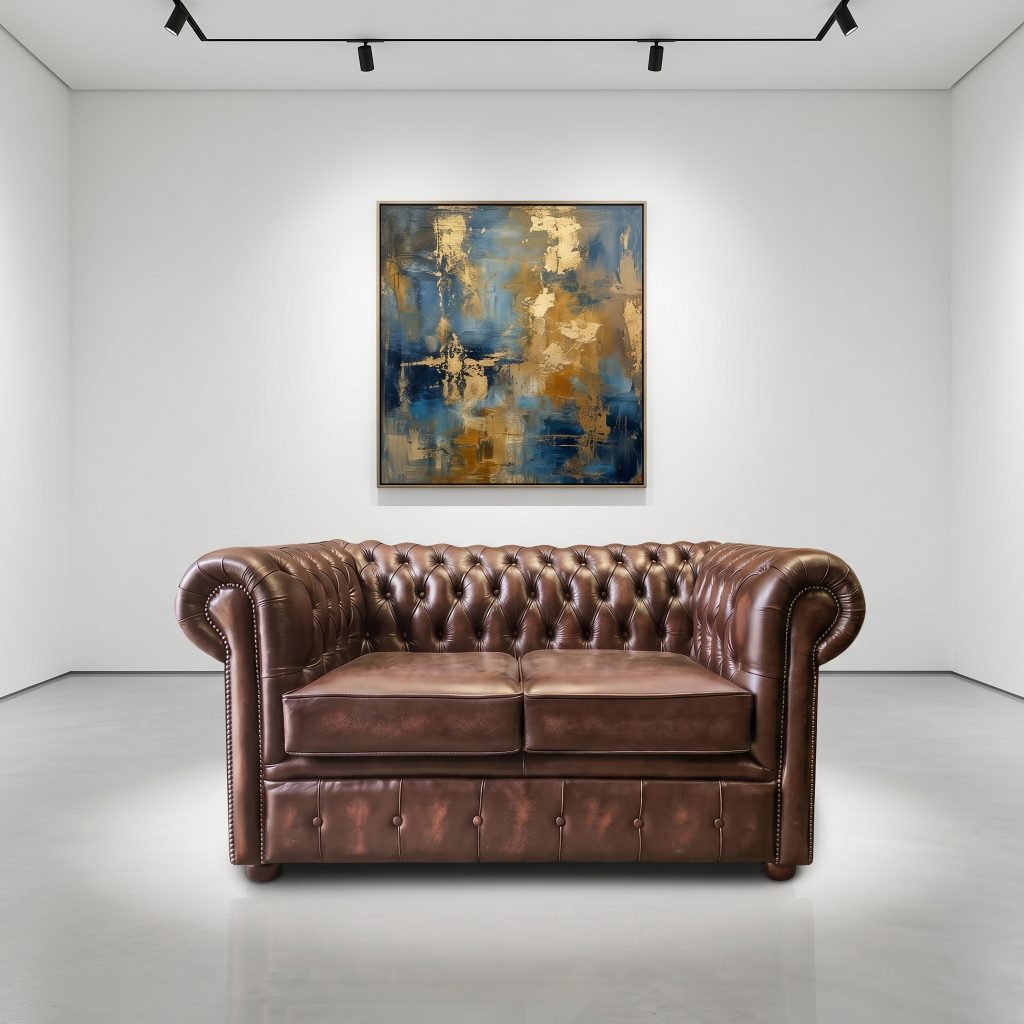
This is not a snobbishness about price. It is a truth about process, about craft, and about what happens when a sofa is engineered to hit a retail price point rather than to stand the test of time. Understanding the difference is one of the most valuable things any homeowner, interior designer, or style-conscious buyer can do.
3–5Years avg. lifespan of a chain store sofa
25+Years a handcrafted sofa can last
40%Lower cost-per-year for quality pieces
The Chain Store Problem: Volume Over Craftsmanship
To understand why the best sofas are never found in chain stores, you first need to understand the commercial reality behind those stores. A chain furniture retailer operates on scale. Their success depends on sourcing hundreds of thousands of identical pieces at the lowest possible cost, marking them up, and moving them through as quickly as possible.
This model is not inherently evil — it serves a purpose. But it is fundamentally incompatible with quality furniture making. The moment a manufacturer has to price a sofa to fit a retail chain’s margin requirements, compromises begin. Kiln-dried hardwood becomes engineered particle board. Eight-way hand-tied springs become sinuous wire springs or, in many budget ranges, no springs at all — just a platform base with foam sitting directly on plywood. The skilled upholsterer who would spend four hours on a single cushion is replaced by an automated cutting machine and assembly-line workers measured on output per hour.
The result looks like a sofa. It functions as a sofa. But it will not feel like, wear like, or last like one of the best sofas on the market.
“A chain store sofa is designed to look its best on the day you buy it. A crafted sofa is designed to look its best on the day your grandchildren inherit it.”
What Makes the Best Sofas Truly Exceptional
When designers and furniture connoisseurs talk about the best sofas in the world, they are referring to specific, measurable characteristics — not aesthetics alone. These are the construction elements that separate genuine quality from convincing imitation.
Frame Construction and Joinery
The skeleton of any sofa is its frame, and the difference between a quality frame and a cheap one is immediately apparent to anyone who knows what to look for. The best sofas are built on kiln-dried hardwood — typically beech, oak, or ash — which has been dried to a precise moisture content to prevent warping, cracking, or twisting over time. Joints are double-dowelled, corner-blocked, and glued. Some makers still hand-mortise their joints, a technique unchanged since the eighteenth century and for good reason.
Chain store frames, by contrast, are commonly made from softwood or engineered wood products that have not been properly dried. They feel solid when new. Within two to three years, they begin to squeak, shift, and, in many cases, fail entirely at the joints.
Fill and Cushioning Materials
The cushion is where you will notice quality most immediately — but it is also where quality disappears fastest. The best sofas use high-resilience foam with a density of 1.8 lb/ft³ or higher, often wrapped in a layer of Dacron or natural down feather for that perfect balance between support and softness. Some makers still use traditional curled hair interleaved with natural latex — a fill that springs back after compression with extraordinary consistency for decades.
Chain store sofas almost universally rely on low-density foam — often below 1.5 lb/ft³ — which compresses and loses its resilience within two to three years. The seat that felt supportive in the showroom becomes a sunken hollow within a single winter of regular use.
Fabric and Leather Quality
Upholstery is the sofa’s skin, and the difference between fabrics is measured in rub counts — the number of double rubs a fabric can withstand before showing wear. A domestic sofa in a busy household needs a minimum of 25,000 double rubs. The finest performance fabrics used by independent makers reach 100,000. Leathers used by quality-focused makers are full-grain or top-grain, correctly treated and conditioned, and cut to follow the hide’s natural grain.
Most chain store fabrics sit between 10,000 and 15,000 double rubs — adequate for a guest room, but inadequate for a daily-use family sofa. The pilling, fading, and sagging that appears after a few years is not a coincidence; it is a consequence of materials selected for cost, not longevity.
Why Independent Furniture Makers Offer the Best Sofas
The alternative to a chain store is not simply a more expensive version of the same thing. Independent furniture makers — whether bespoke British upholsterers, family-run Italian ateliers, or skilled craftspeople operating from studios — operate on entirely different principles.
They are making fewer pieces, which means every piece receives genuine attention. A head upholsterer at a respected independent workshop can name every sofa that left their hands in the past month. They remember the conversations about seat depth, the adjustments made to arm height, the particular shade of velvet chosen after three sample orders. This level of care is not sentimentality — it is quality control of the most effective kind.
Independent makers also tend to offer meaningful customisation. The best sofas are rarely the best for everyone in their standard configuration. Seat height matters profoundly for comfort — a person of 5’4″ and a person of 6’2″ have radically different requirements. Arm height, back angle, cushion firmness, and even the depth of the platform all affect whether a sofa becomes a favourite seat in the house or a beautiful piece that nobody quite settles into.
- Bespoke frame dimensions tailored to your space and body
- Choice of cushion fill from firm latex to cloud-like down
- Hundreds of fabric and leather options, including exclusive house weaves
- Direct access to the maker for adjustments and repairs
- Transparent materials sourcing — you know exactly what you’re sitting on
- Generational longevity — pieces built to be passed down, not replaced
If you are beginning your search for the ideal piece, our complete guide to buying a quality sofa covers everything from measuring your room to understanding spring systems — an essential read before making any decision.
The True Cost of a Chain Store Sofa
One of the most persistent myths in furniture buying is that chain store sofas represent good value because of their lower upfront cost. The economics, when examined honestly, tell a different story entirely.
Consider a chain store sofa purchased for £1,200. Within five years — the optimistic end of its lifespan — it will likely need replacing. Over fifteen years, that means three purchases, totalling £3,600, plus the environmental cost of three disposals. Contrast this with a handcrafted sofa at £3,500 from a respected independent maker. Properly cared for, it will outlast those three chain store cycles with cushion comfort still intact and the frame as sound as the day it was made. The cost per year of ownership is not just comparable — it is significantly lower.
This calculation does not even account for the invisible costs: the disappointment of a piece that looks tired within two years, the back discomfort of cushions that have lost their support, or the environmental impact of fast furniture filling landfills at an accelerating rate.
“Buy once, buy well. The best sofas pay for themselves — not in years, but in the life you live around them.”
How to Find the Best Sofas Outside the Chain Store World
If the best sofas are not in chain stores, the natural question is: where are they? The answer requires a slight adjustment in how most people approach furniture shopping. The best sofas are not always advertised on motorway billboards. They are found through recommendation, through reputation, and — increasingly — through a new generation of independent makers who combine traditional craft with a contemporary online presence.
- Visit independent showrooms:Seek out furniture makers with a physical workshop or showroom — the ability to see and feel the construction is irreplaceable.
- Ask about the frame:Any quality maker will be delighted to explain their frame construction. Evasiveness here is a red flag.
- Request a cushion specification sheet:Know the density and composition of the foam and any wrapping used.
- Check lead times:The best sofas take time. A 10–16 week lead time from an independent maker is a sign of genuine craft, not inefficiency.
- Look for a heritage of repair:Makers who will re-upholster or repair their sofas decades later stand behind their work in the most meaningful way possible.
For those interested in the broader conversation around sustainable furniture and slow interiors, the Furniture Makers’ Company maintains an excellent directory of craft furniture practitioners in the United Kingdom, with rigorous standards for admission.
The Best Sofas Are Worth the Investment
There is a deeper truth at the heart of this conversation, one that extends beyond upholstery and joinery. The way we furnish our homes reflects the way we think about time, value, and the kind of life we want to live. A culture of fast furniture — buy it, use it briefly, discard it — is ultimately a culture of disposability. The best sofas, by contrast, invite a different relationship with your home: one grounded in continuity, in craft, and in the satisfaction of surrounding yourself with things made to endure.
This is the quiet promise of every great independent furniture maker: not just a better sofa, but a better way of living with the objects around you. When you sink into a piece that has been built with genuine skill and care, the difference is not subtle. It is immediately, completely, and profoundly apparent.
The best sofas are never found in chain stores because the best sofas cannot be made in chain store conditions. They require time, skill, materials selected for performance rather than price, and a maker who cares about the outcome more than the margin. Finding that maker is one of the most rewarding decisions you will make for your home.
Frequently Asked Questions
Why are the best sofas not found in chain stores?
The best sofas are crafted in limited quantities by skilled artisans using premium materials. Chain stores prioritise volume and low cost, which requires compromises in frame construction, cushion fill, and fabric quality that independent makers refuse to accept.
How long should a quality sofa last?
Awell-made sofa crafted from hardwood frames, high-resilience foam, and quality upholstery should last 15 to 25 years with proper care. Chain store sofas typically show significant wear within 3 to 5 years.
What should I look for when buying the best sofa?
Look for a kiln-dried hardwood frame, eight-way hand-tied springs or sinuous spring systems, high-resilience foam with a density above 1.8 lb/ft³, and fabric with a rub count above 25,000 double rubs for heavy use areas.
Are independent sofa makers worth the extra cost?
Absolutely. The cost-per-year of a quality sofa from an independent maker is almost always lower than a chain store model when you factor in longevity, comfort consistency, and the absence of reupholstering or replacement costs.